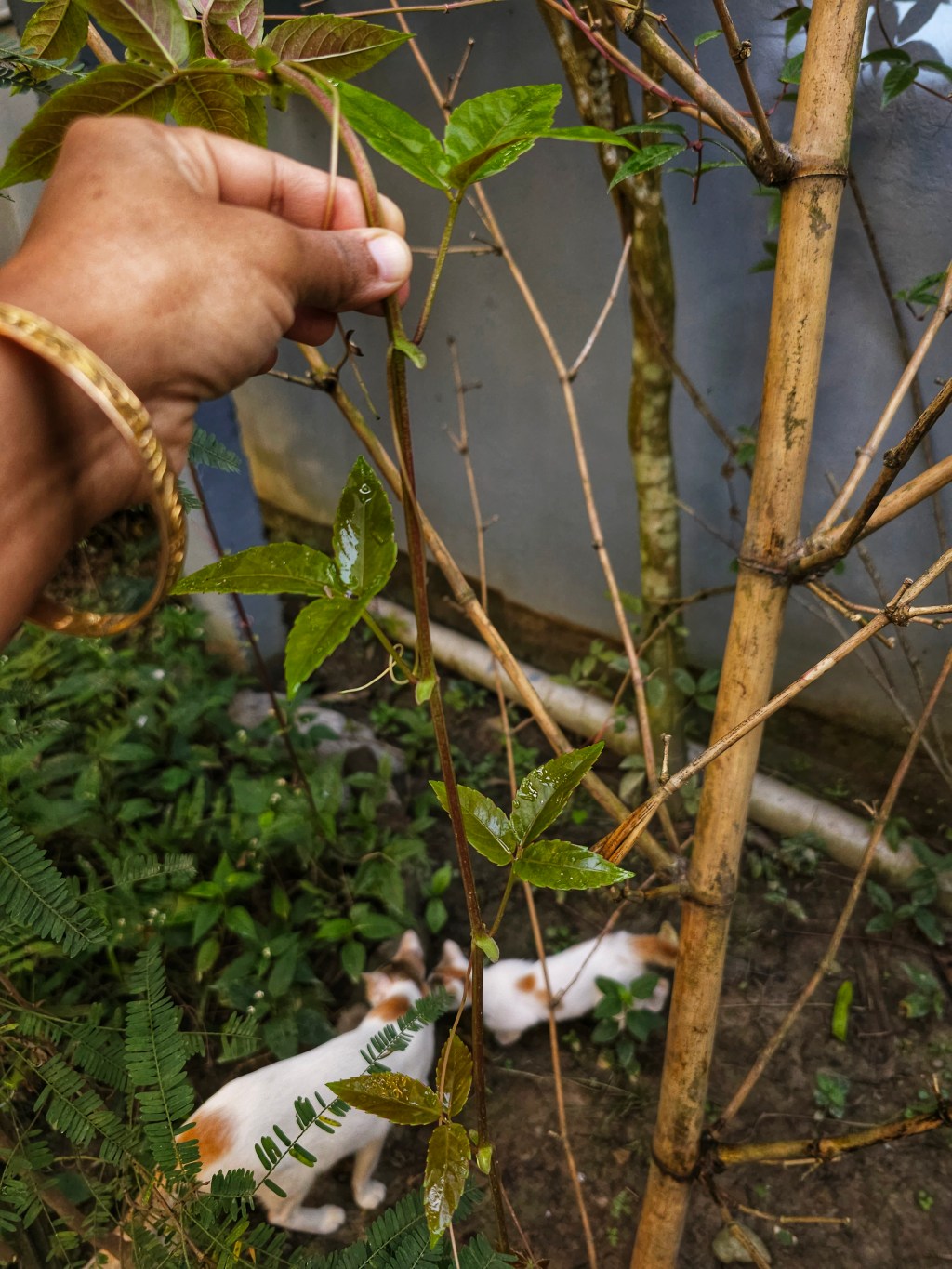
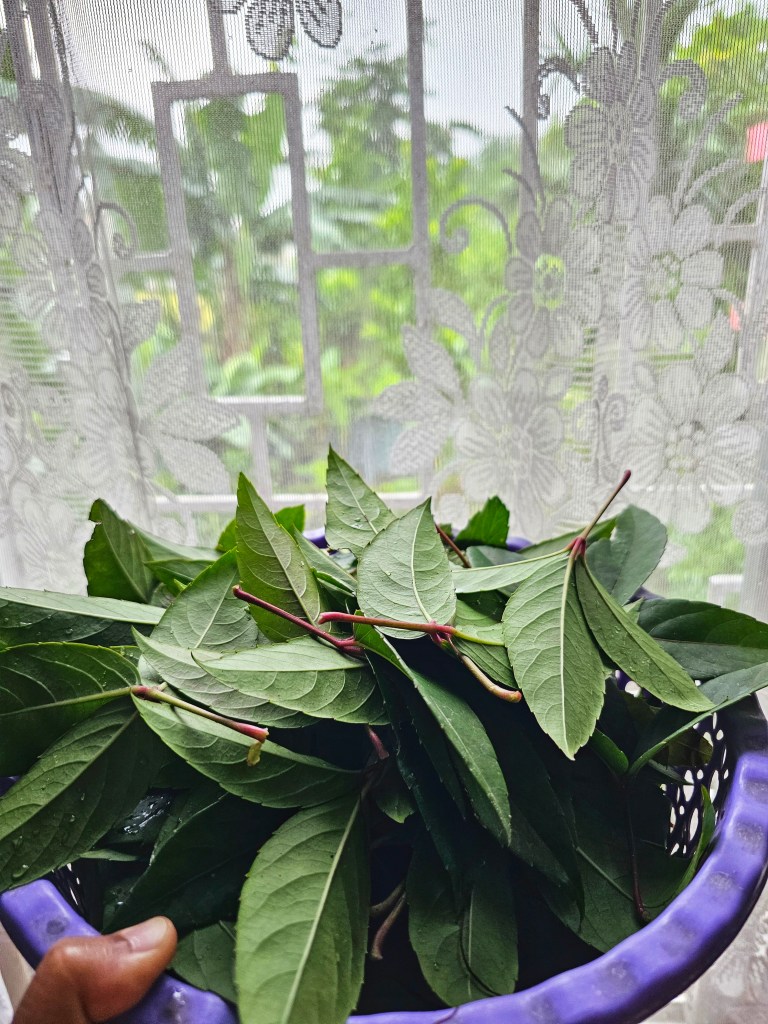
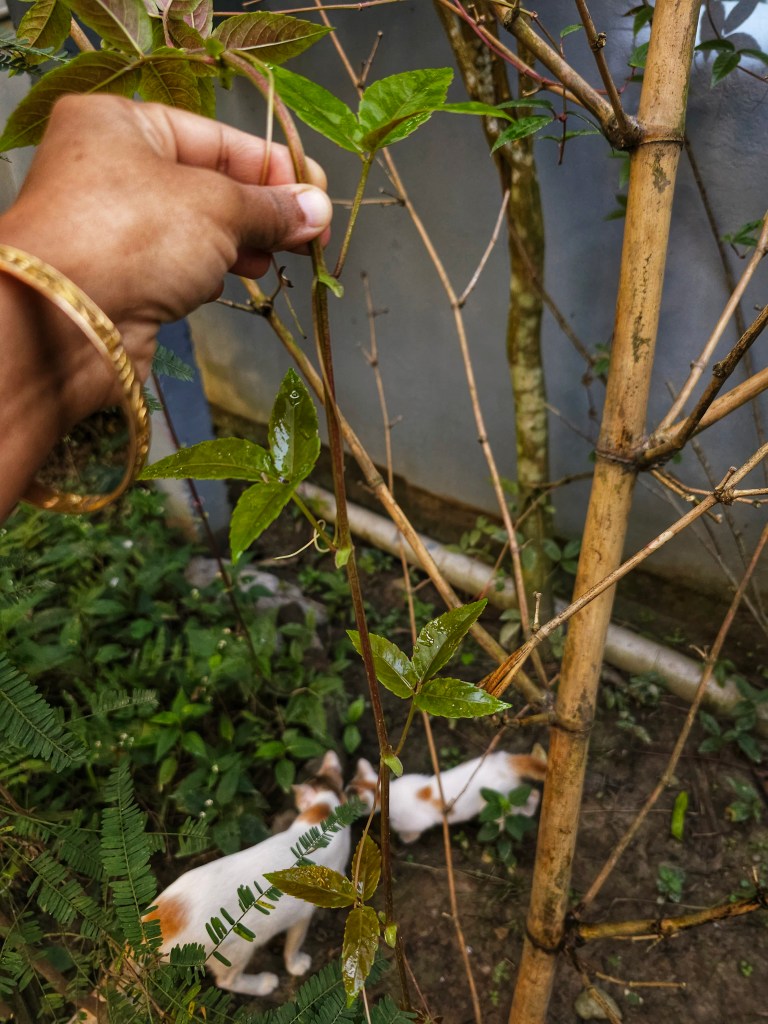
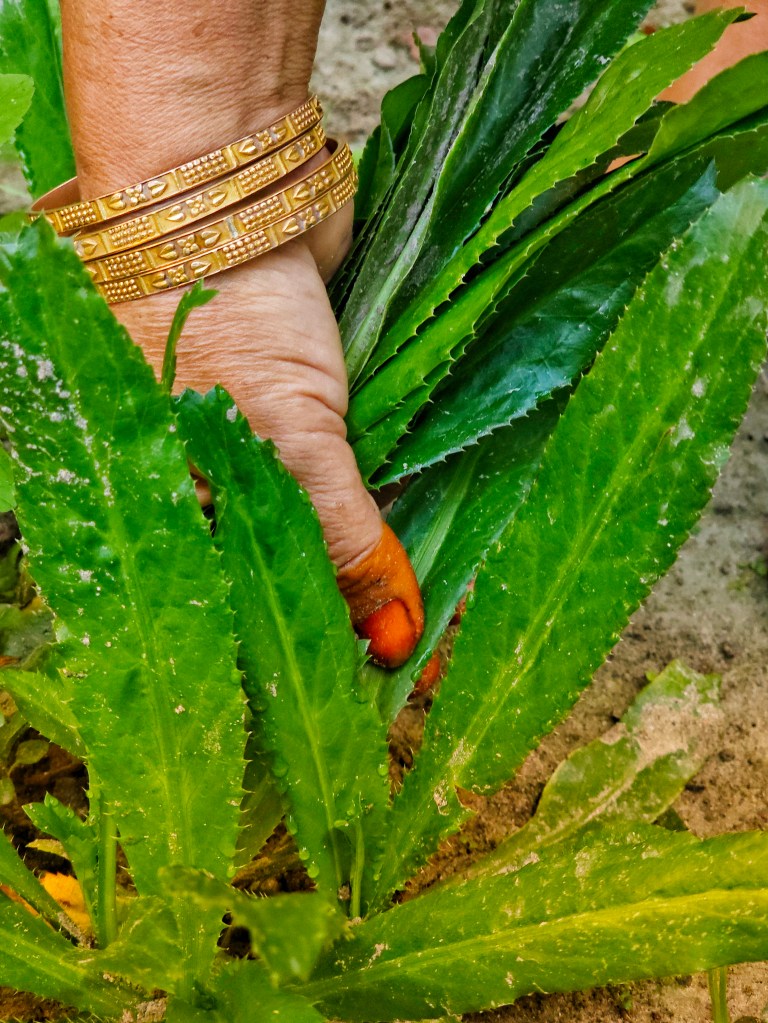
Do you recognize these leaves?
We were introduced to them not so long ago by my cousin’s wife. She called it Bata Tenga. While researching for this post, I discovered it’s commonly known as Nal Tenga and some call it Moimoti Tenga or Tinpatia Tenga (the three-leaved sour creeper).
It belongs to the Vitaceae family, a delicate vine that looks a bit like the Indian chestnut creeper. We planted it in our backyard last year, and this summer, the green spread over the trees close by and the boundary wall like it belonged there all along. Since then, we have been plucking its fresh leaves, mostly for those light, tangy fish curries that make Assamese summers bearable.
In Assam, tenga (meaning sour) foods are a season in themselves. Summers bring with them a plateful of cooling, sour ingredients: from limes and lemons, to roselle leaves and now this leafy Nal Tenga. According to Ayurveda, sour foods balance Pitta dosha, cool the system, and aid digestion. When paired with fish or meat, they help metabolize fats and support the liver’s natural detox process. It’s the body’s way of keeping calm through the heat.
But at Swarna’s Homestay, we love giving tradition a gentle twist. Mom stays loyal to the classics, but I can’t resist experimenting in the kitchen every now and then. That’s one of my definitions of rest: being with myself, pouring all my happy mood and creativity into a dish.
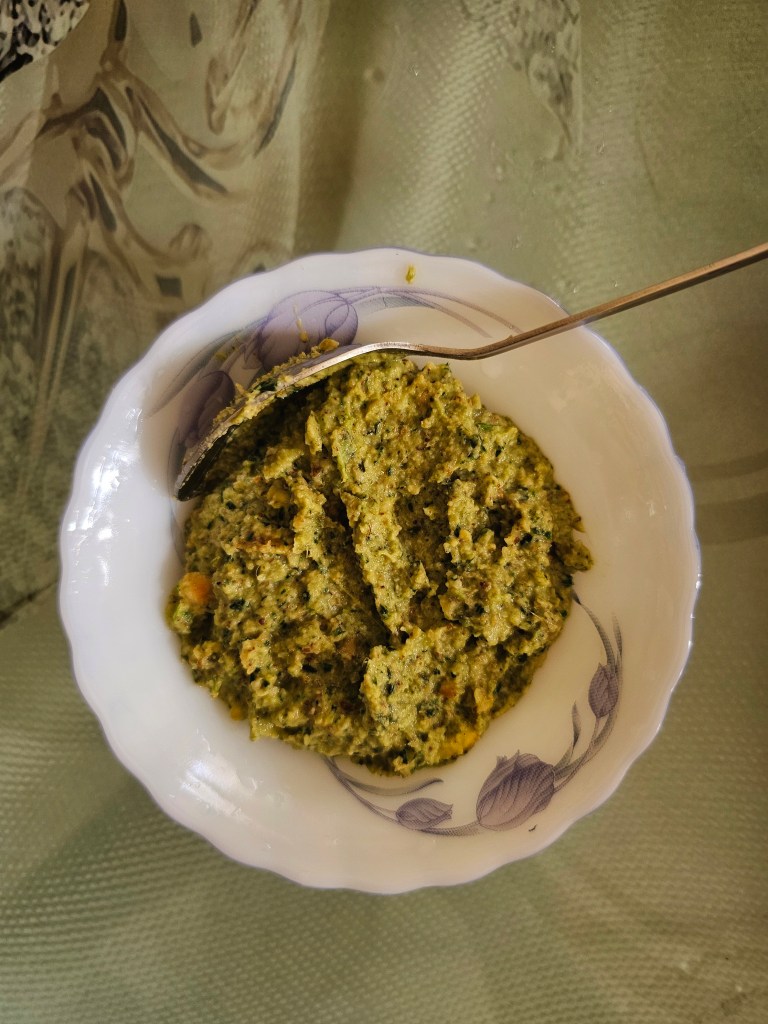
Yesterday’s little experiment gave birth to what might be one of my favourite recipes of the season: Nutty Nal Tenga Spread.
It began quite simply. I fried a few garlic cloves till they turned golden and fragrant, then added a handful of cashews, groundnuts, almonds, and pumpkin seeds. As the nuts crisped and released their earthy aroma, I stirred in some powdered kala chana, sawtooth coriander (maan dhaniya), a bit of dried coconut, and finally, a few tender Nal Tenga leaves for that signature tang. A pinch of salt brought it all together. I let everything sizzle gently until the Nal Tenga leaves softened and melted into a rich, green paste; then turned off the flame. Once it cooled, a quick blend and the magic unfolded.
When I tasted it, I realized I had just stumbled upon the perfect bread and sandwich spread. It carried a balanced melody of flavours – sweet, sour, salty, pungent, and hot (if you add the chilies!). But with summers now behind us, it tasted just perfect for a late-autumn midday tea and snacks, when the air turns mellow and the sun feels like a gentle companion.
There’s something deeply grounding about curating our own recipe, from our garden harvests: as if each flavour reminds me that home, after all, is a space we create with our hands and heart.
 Casually Classical
Leave a comment