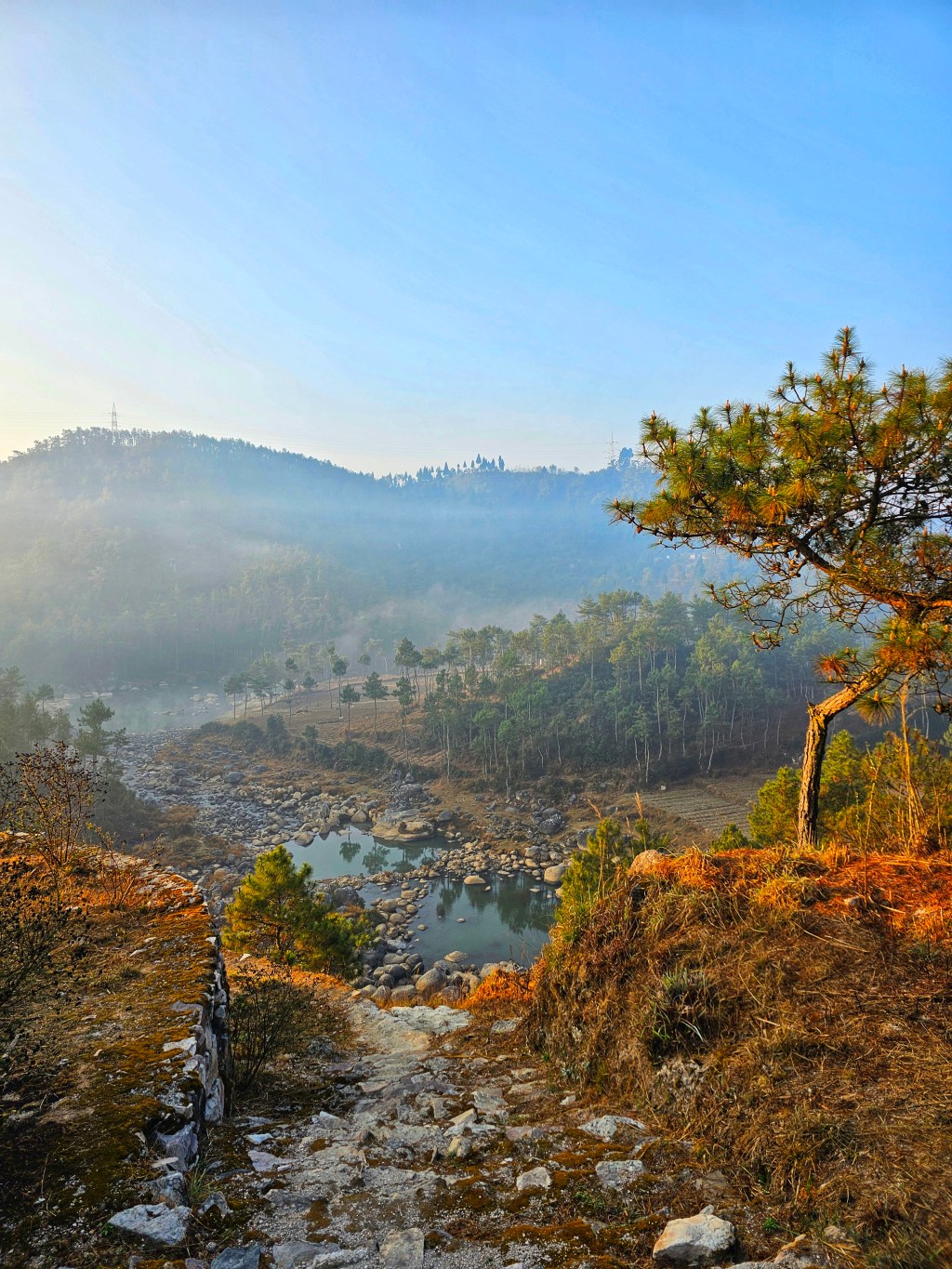
Recently, again on a whim, I set off for Meghalaya – without any plan or purpose. Do you know what the most fascinating aspect of travelling is, beyond the chance to explore lives different from our own? It’s the surprises. Travel often brings more unexpected moments in just a few days than we are likely to experience in our routine lives over an entire year. We can plan, but we can’t predict. And once we have spent a fair amount of time travelling in our lives, planning doesn’t hold any charm or excitement. The excitement now resides in the unknown; in the anticipation of the gasps and gawks, raised eyebrows and dropped jaws.
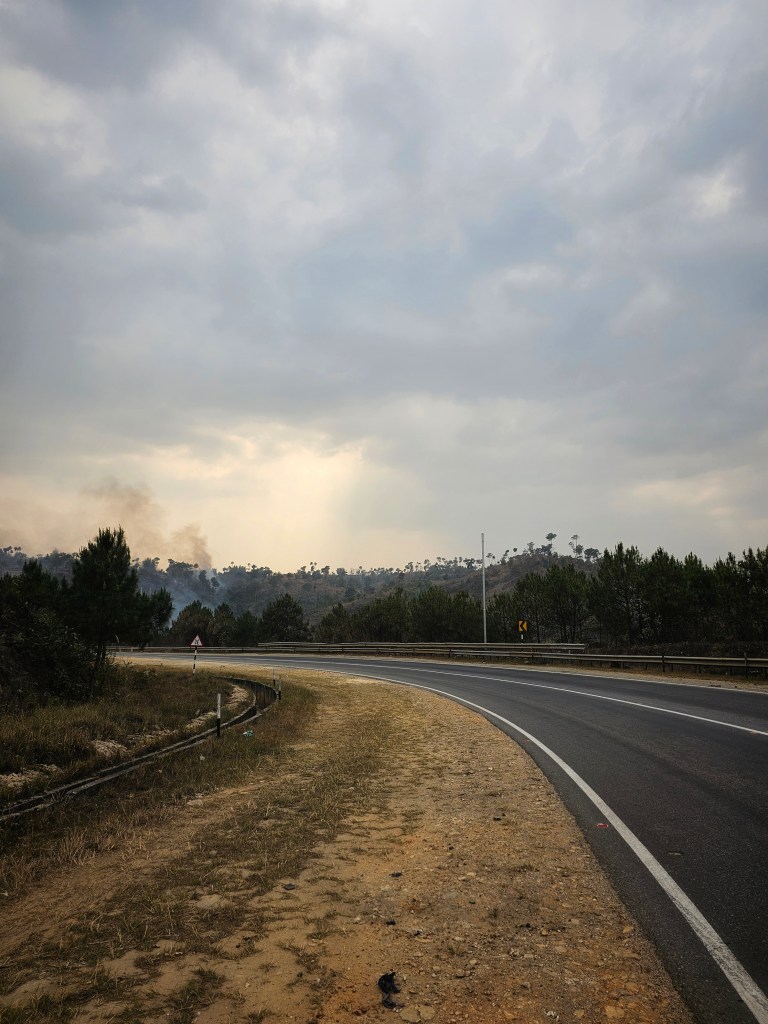
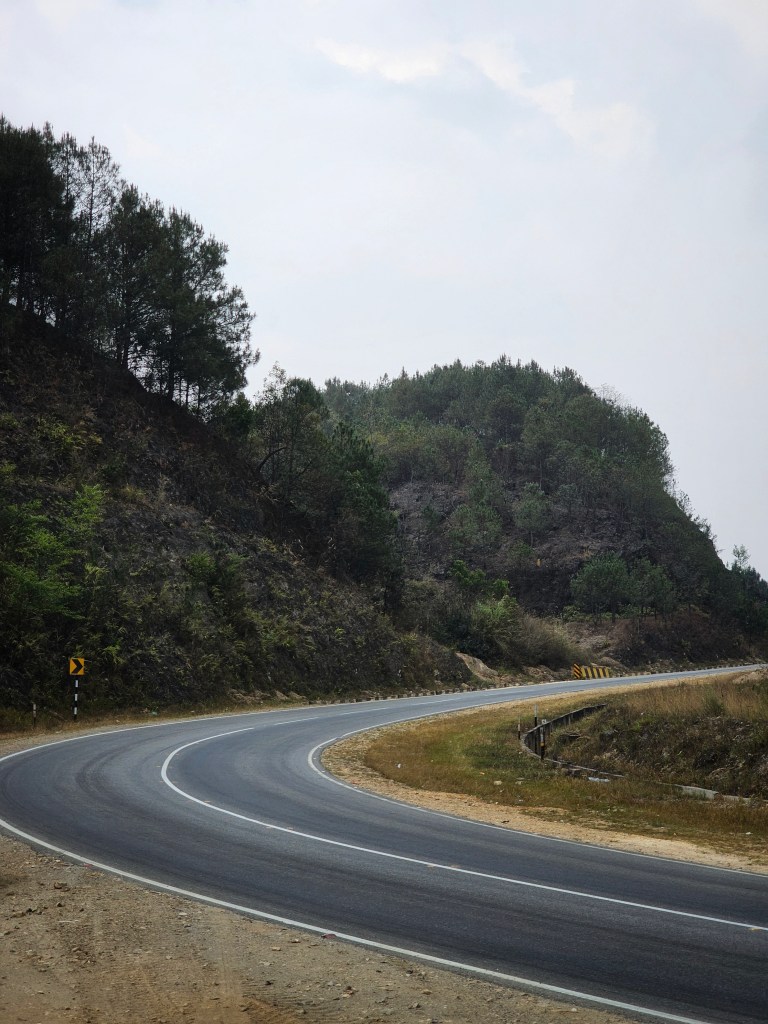
We began our journey early in the morning, bought some oranges from a roadside shop after crossing the crowded junction of Nongpoh and enjoyed those sweet juicy little treats as we took the low-traffic Shillong bypass. It was my first time on that road, and although it’s the longer of the two highways, the ride was incredibly refreshing. The smooth road, flanked by oaks and pines, offered glimpses of beautiful hills and valleys wherever construction hadn’t yet taken over. By noon, an overcast sky greeted us, reminding me of a moody day I had witnessed during my visit back in 2015.


Whenever I am in Meghalaya, I find myself drawn to the narrow lanes of Shillong – wandering through them, savoring steaming momos, scouting out charming patisseries, and, of course, reading myself to sleep. Every place has its own character and Shillong’s blend of slow countryside charm and quiet elegance always pulls me in. It stirs a longing for the 90s and early 2000s, a simpler unhurried time, with a mellow jazz to it. Suddenly all I want to do is bask in the sunlight, enjoy classic English breakfasts, listen to blues, soul and R&B, leave my phone behind and just relax – with a good book in hand.
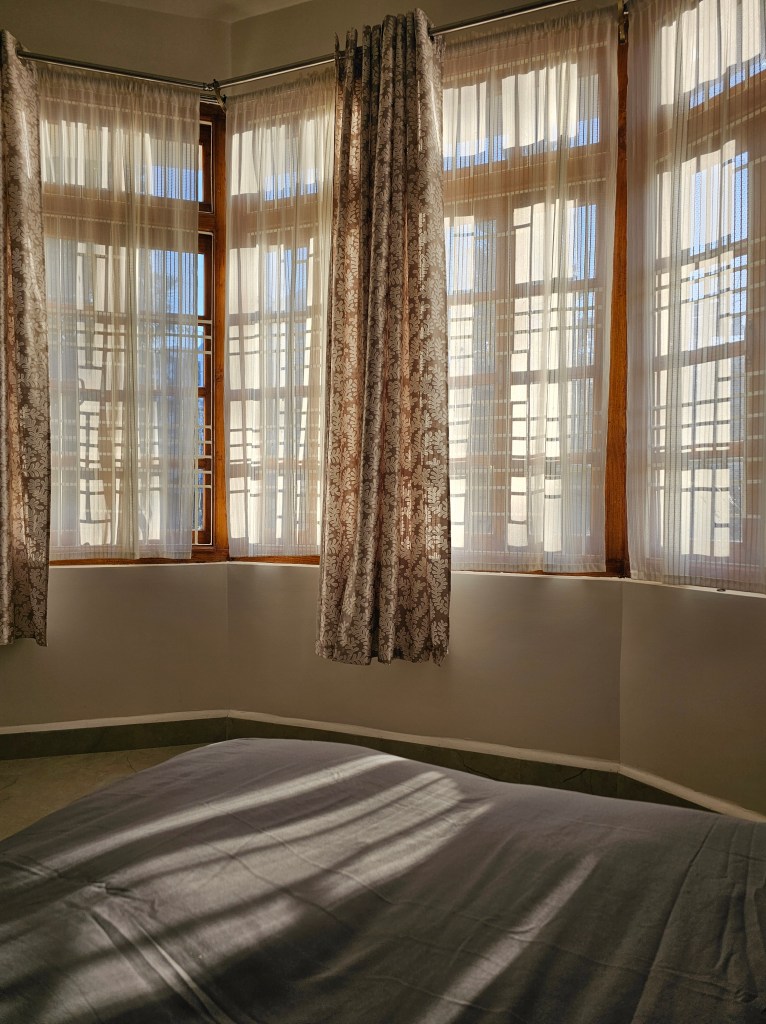
Luckily my stay – Lavelette House – was in Lachumiere, the perfect spot for revisiting old memories. My college, Police Bazar, the places I once lived in (Laitumukhrah and Laban), Wards Lake, the Cathedral – were all just a short – and almost equal – distance away. Back in our college days, while hunting for rental houses, we often wandered through Lachumiere, wondering if we would ever get to live in one of those artisitically built cottages with gardens. La Chaumière in French means ‘The Cottage’, though its origin here is uncertain. Some believe it may have come from ‘La Chaminee’, meaning ‘The Chimney’. Lachumiere remains one of the city’s oldest residential localities – graced with a touch of opulence – and is home to some of Shillong’s oldest schools and colleges.
That evening, I walked a few kilometers and treated myself to some delicious momos and a Vietnamese rice platter at The Wok in Lachumiere. Content and well-fed, I drifted into a deep, peaceful sleep – cradled by the stillness of the night.
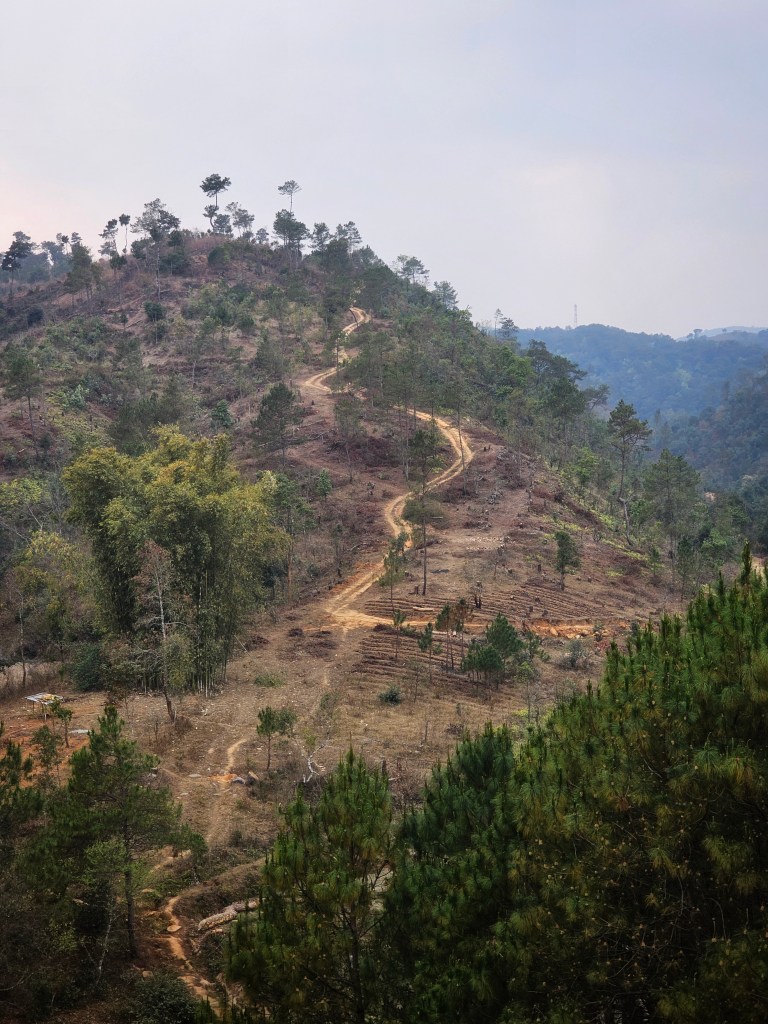
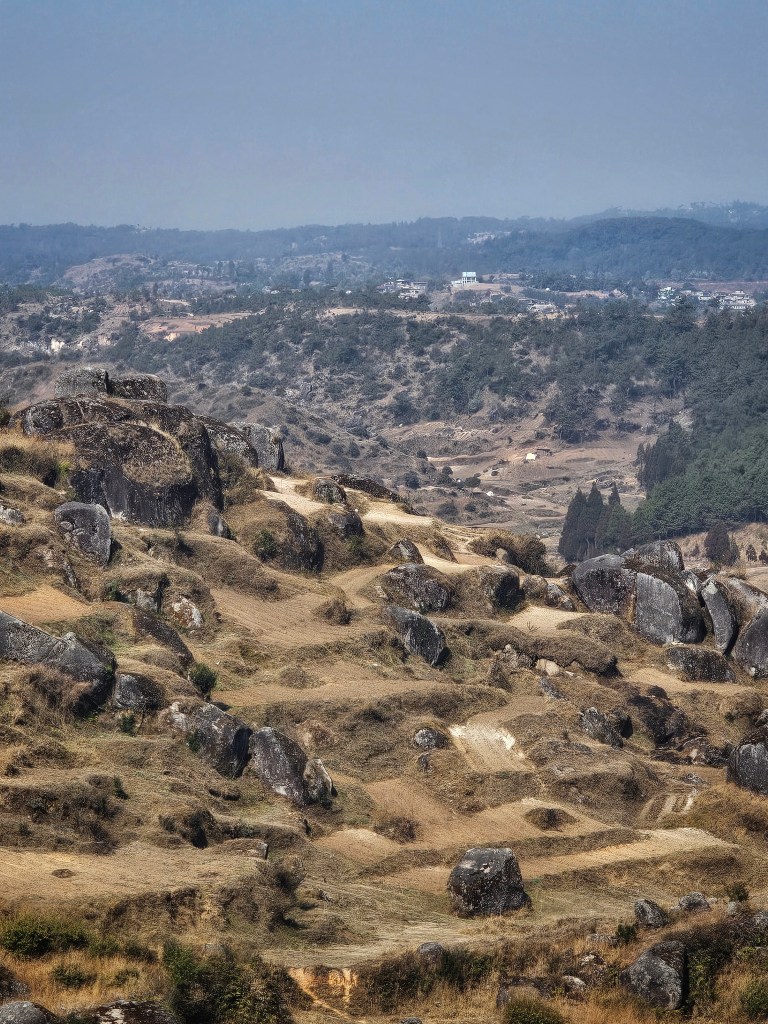
The next day, with the exhaustion of the previous day’s journey behind me, I looked forward to travelling via Smit towards Laitlum, and then onward to my next stay near Mylliem. The last time I was in Smit, I ended up writing this piece about my experience. Smit will always hold a special place in my heart. It is, perhaps, human nature to expect constancy and be wary of change. I am no exception. As we drove on, I kept searching for the vast green moors I remembered. Okay, maybe not green – it is the dry season after all – but at least the rolling hills, untouched and expansive, should have remained. Instead all I could see was construction: roads, resorts, stretches of gravel and rock fields, stripped bare of trees. The landscape has changed beyond recognition! The only area which has seen little change was the Smit market.
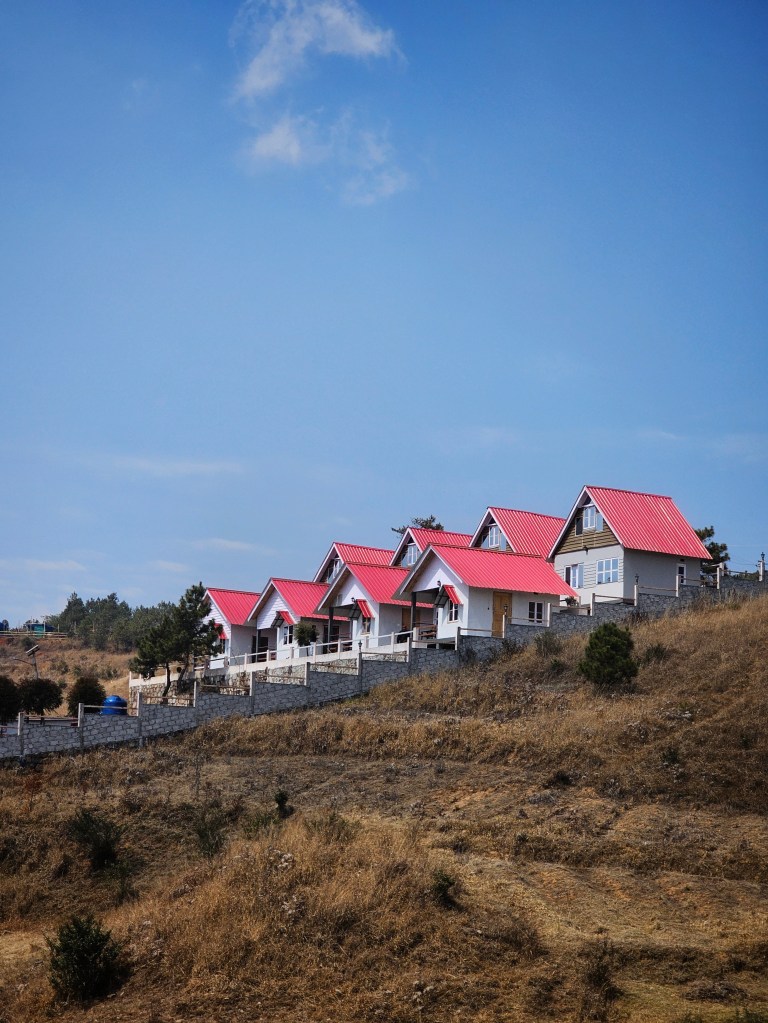

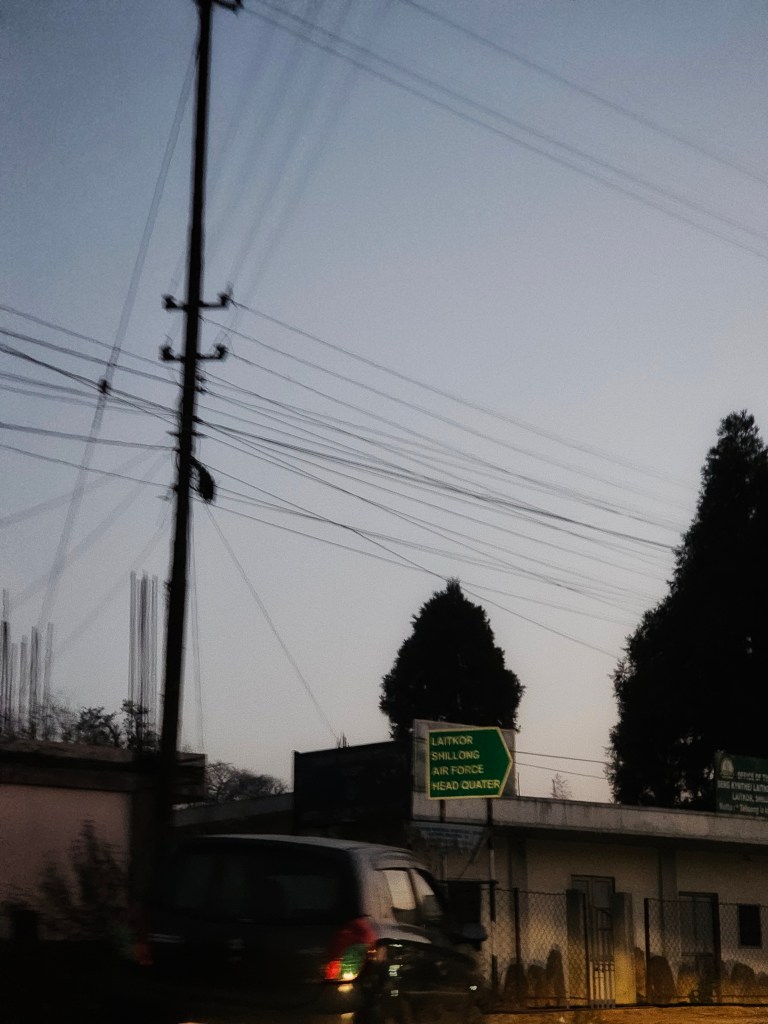
At the same time, the resistance to outsiders that we had sensed in 2015 was completely absent. I felt a quiet joy as we passed through Laitkor a couple of times and saw its name clearly marked on roadside directional signs, because last time all we were aware of were suspicious, sometimes hostile eyes of the locals. Today Meghalaya feels much more tourist friendly. But as we know, such shifts rarely comes without a cost. The people are now paying the price for embracing unchecked, pro development measures, which have drastically reduced the region’s green cover and caused massive increase in construction dust and sharp rise in temperatures.
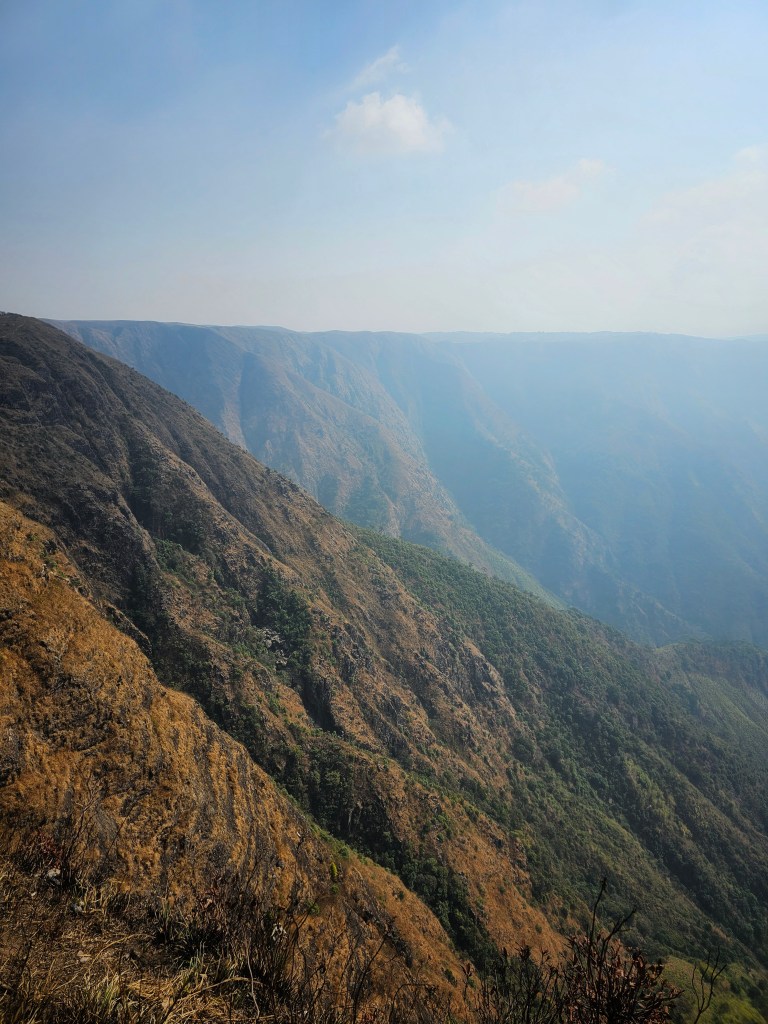
Further, Laitlum Canyon, like many other popular tourist spots, left me disappointed. When a place draws too much attention, it often attracts mass tourism and drives away the slow, mindful travellers who come seeking connection rather than a spectacle. Laitlum, sadly, seems to be heading down that path. The canyon’s raw splendor felt overshadowed by large, noisy crowds, a frenzy of selfies, wandering vendors selling tea and snacks, and a complete lack of crowd control or management. I had hoped to spend two to three hours soaking in the view – but in the end, I barely lasted fifteen minutes.
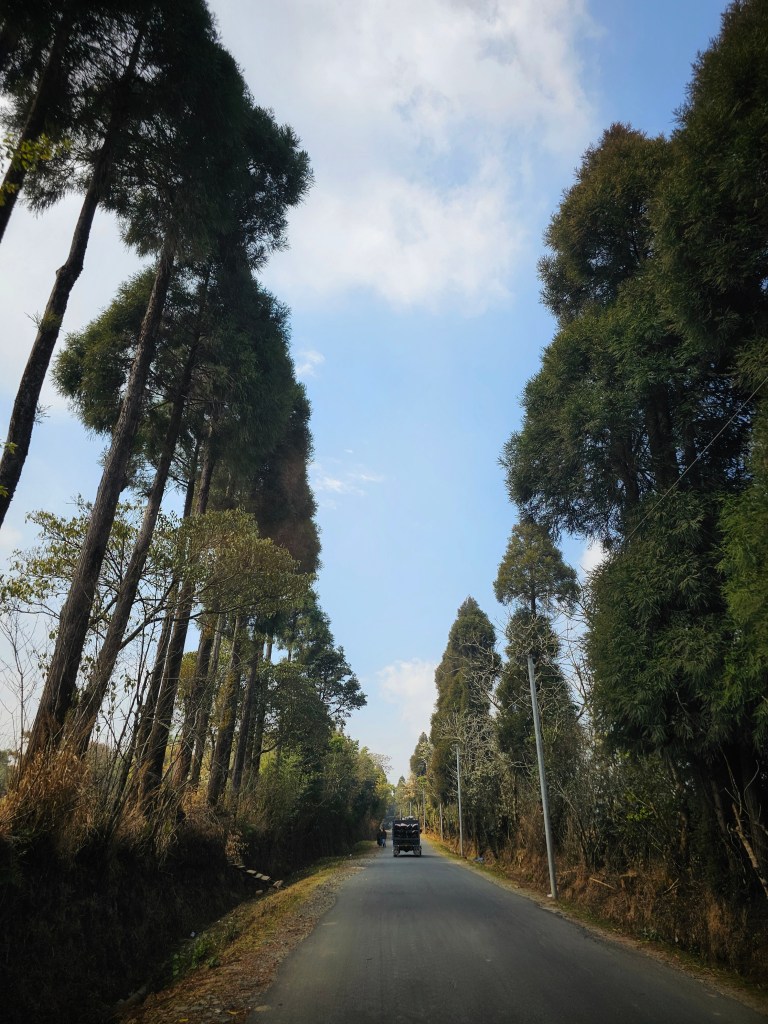
From Laitlum, we decided to continue towards Cherrapunji, as we still had the whole day left. But with construction work sprawling across much of the route, the ride lost its appeal. We stopped for a meal, at a roadside restaurant – the Orange Roots – before heading back toward Mylliem. My next stay, Amit’s secluded cottage – inside the Mystical Rose Resort and Cascade Park – was situated by a cascading river. I had hoped it would be the highlight of the trip – and it truly was.
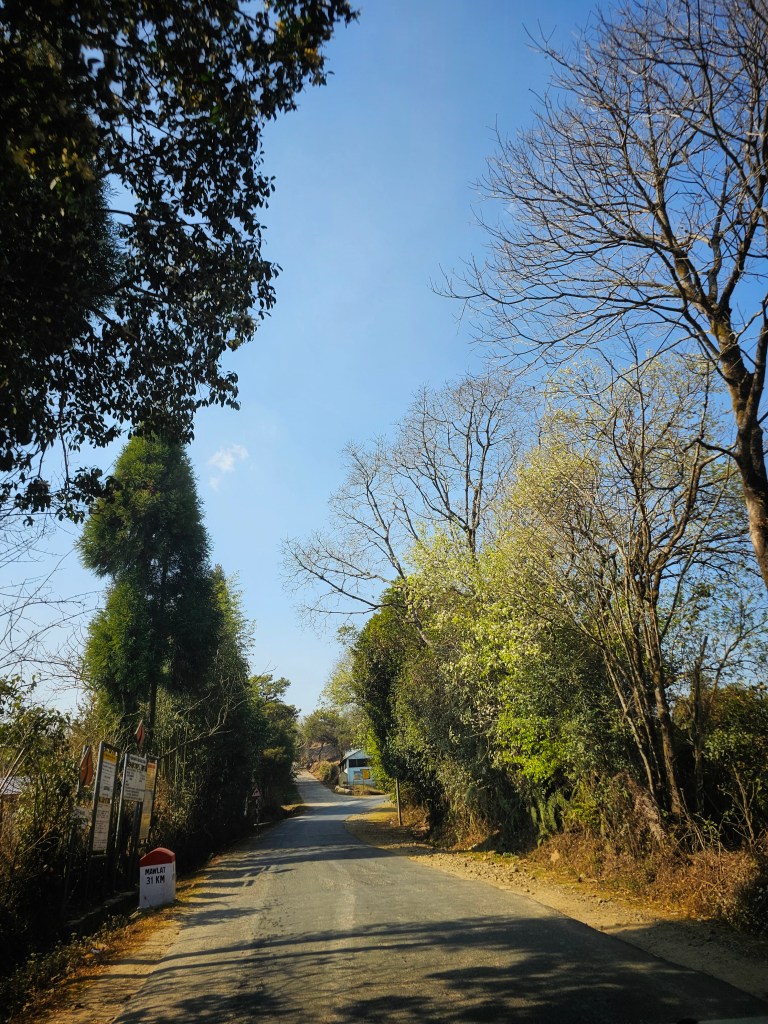
As we drove through stretches of rural Meghalaya, I couldn’t help but feel that the village folk have much to teach us – about hard work, conservation, sustainability and peace of mind. Of course, many villagers might not share this romanticized view. They are more likely to compare their lives with those of their comfortably living counterparts in the plains. Life in the hills can be hard, and yet revealing of the depths of human compassion and human-nature connection.
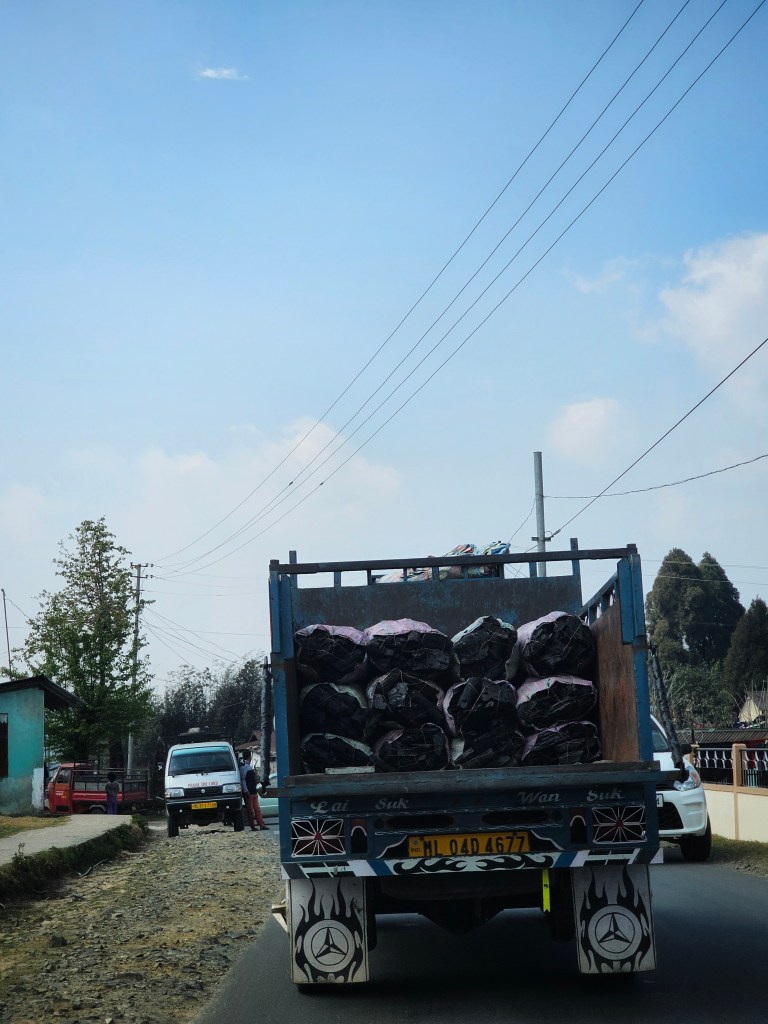
While passing through a small hill town, I heard a strange whistle and was surprised to find that it came from the driver of a truck loaded with coal. It took me back to the winters when we used coal to heat our rooms. We stayed closer to Shillong and bought some coal whenever we needed. When I saw this scene, I thought pensively – ah, this is how they supplied coal in the remotest parts of Meghalaya! Most likely the whistle was a signal, and houses or shops that had run out of stock of coal would respond to restock their supply.
The higher we climbed, the drier people’s skin appeared – some with visibly cracked cheeks and lips, their faces marked by the harshness of the climate. Water is scarce in these parts. It cannot be easily drawn from the ground, so locals rely on springs and cascades. The dry season is especially challenging, as even these natural resources begin to dwindle – further strained by shifting weather patterns and a growing dearth of rain. People carry their laundry for kilometers, either to rivers or to community tanks where water is stored from nearby sources. Taking a shower becomes a rare luxury. Sundays, being more relaxed, are when many take time to enjoy that small comfort.
Most of the young boys and girls were either engaged in carrying log piles and fodder, or tending to livestock as shepherds. The elders were busy too – some sowing seeds in the terraced farms, others washing laundry by the streams. The villages themselves were quaint and quiet; we hardly came across any villagers on the roads. Life seemed to move in its own silent rhythm, away from the loud and vibrant city life.
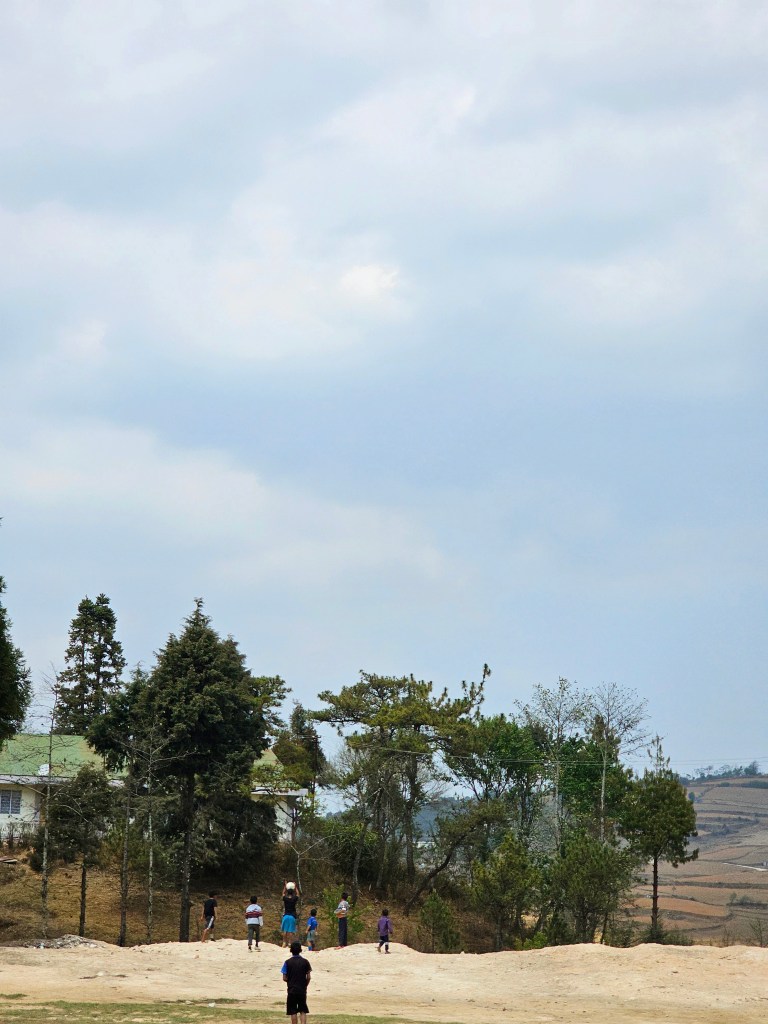
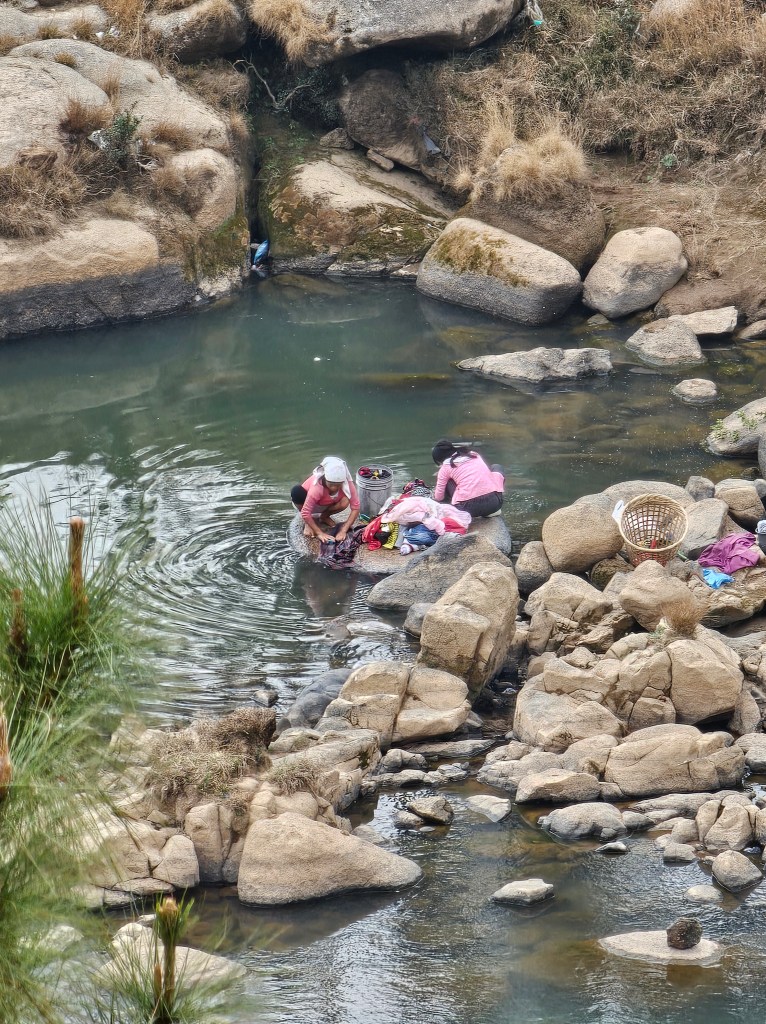
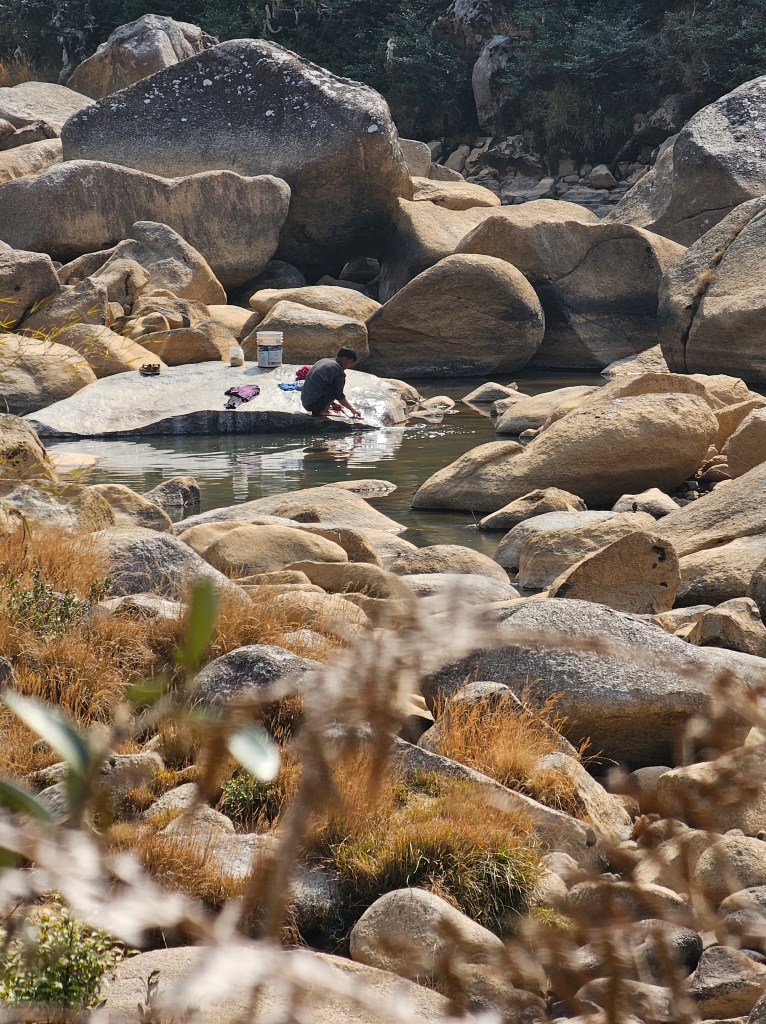
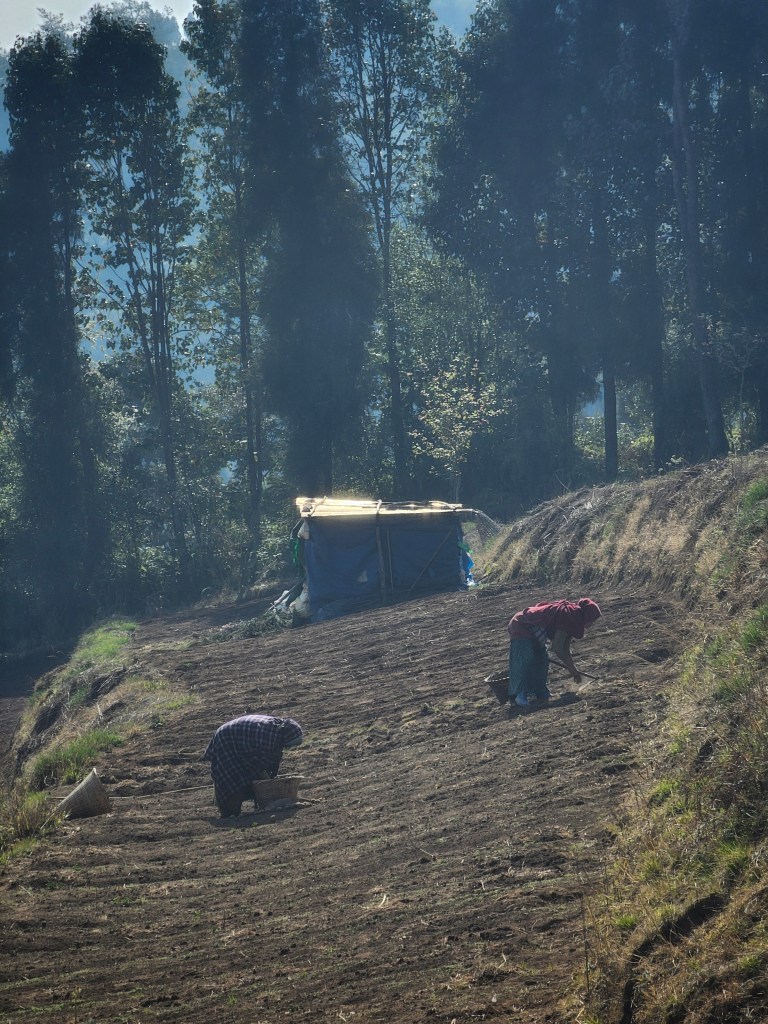
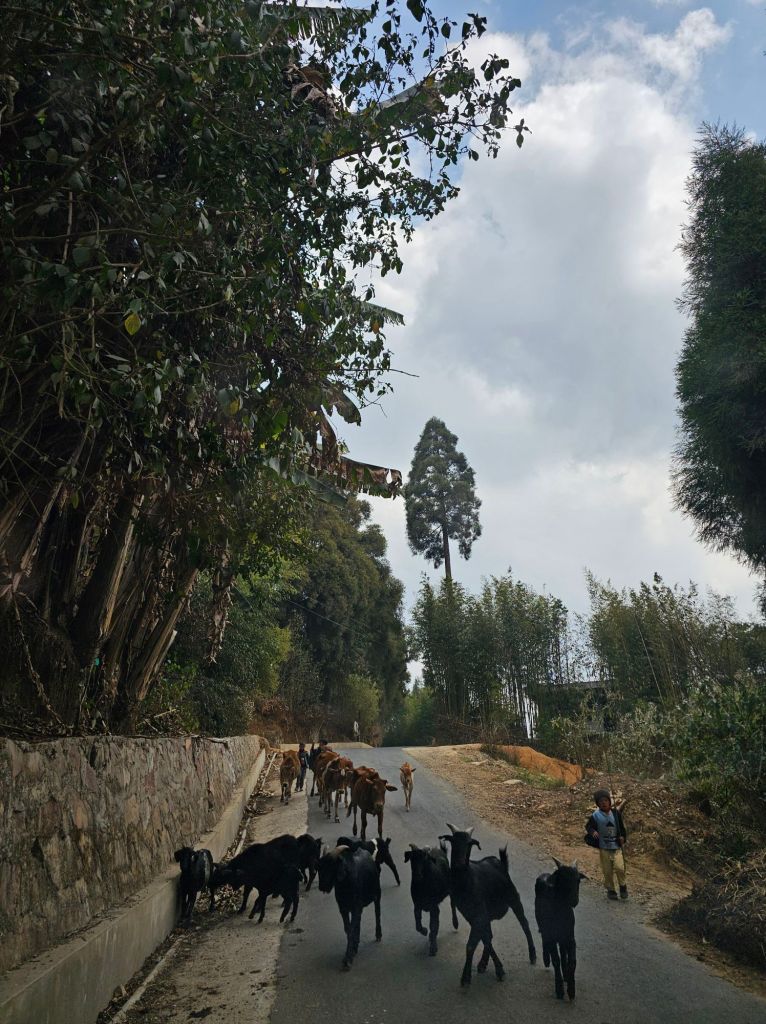
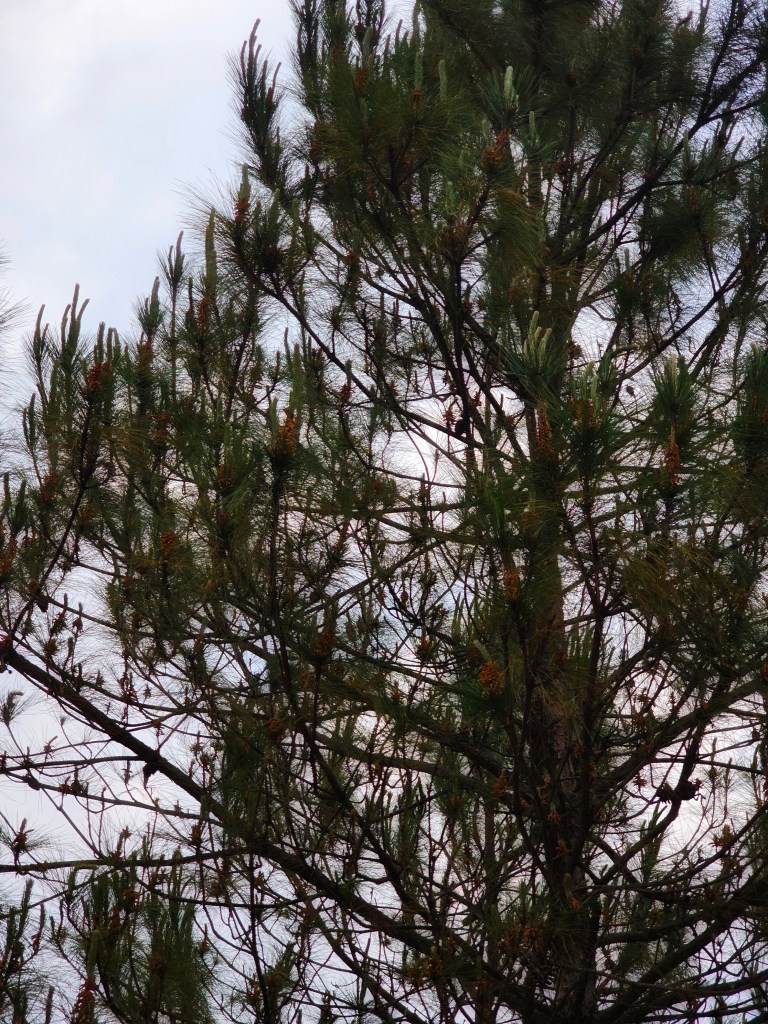
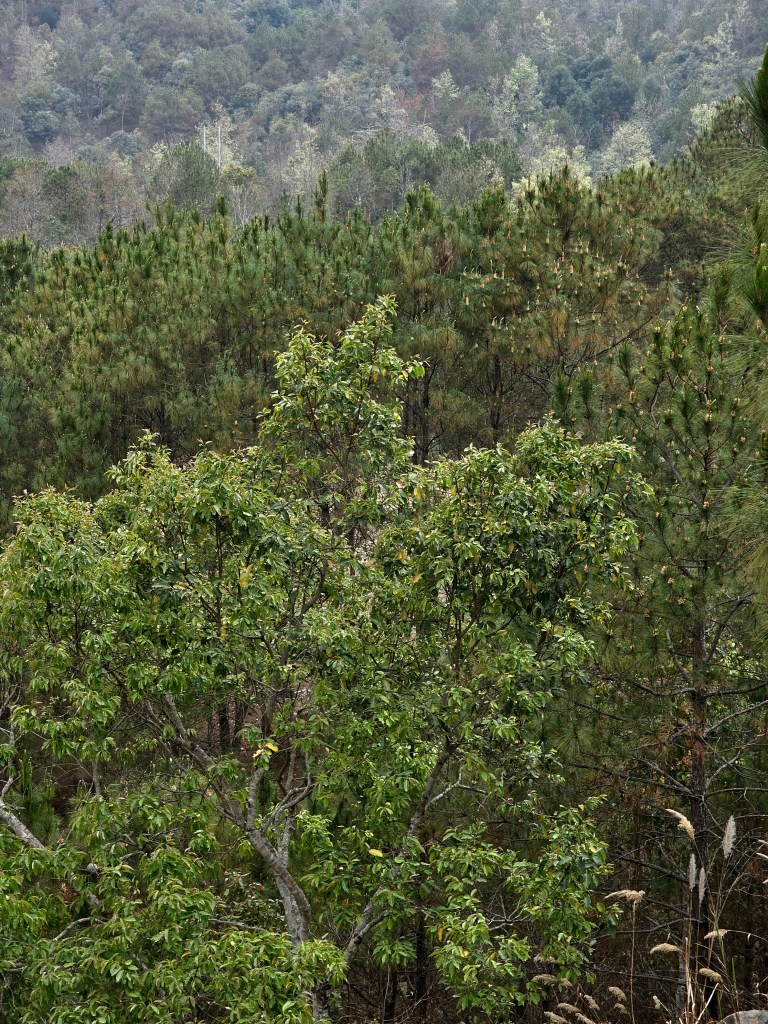
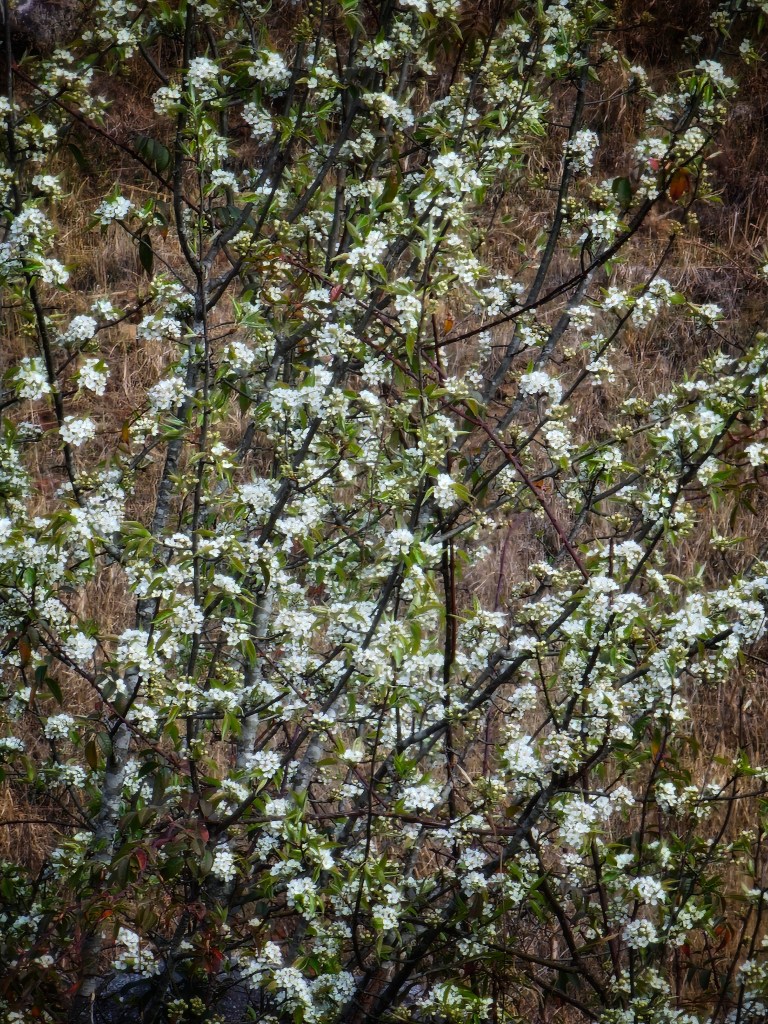
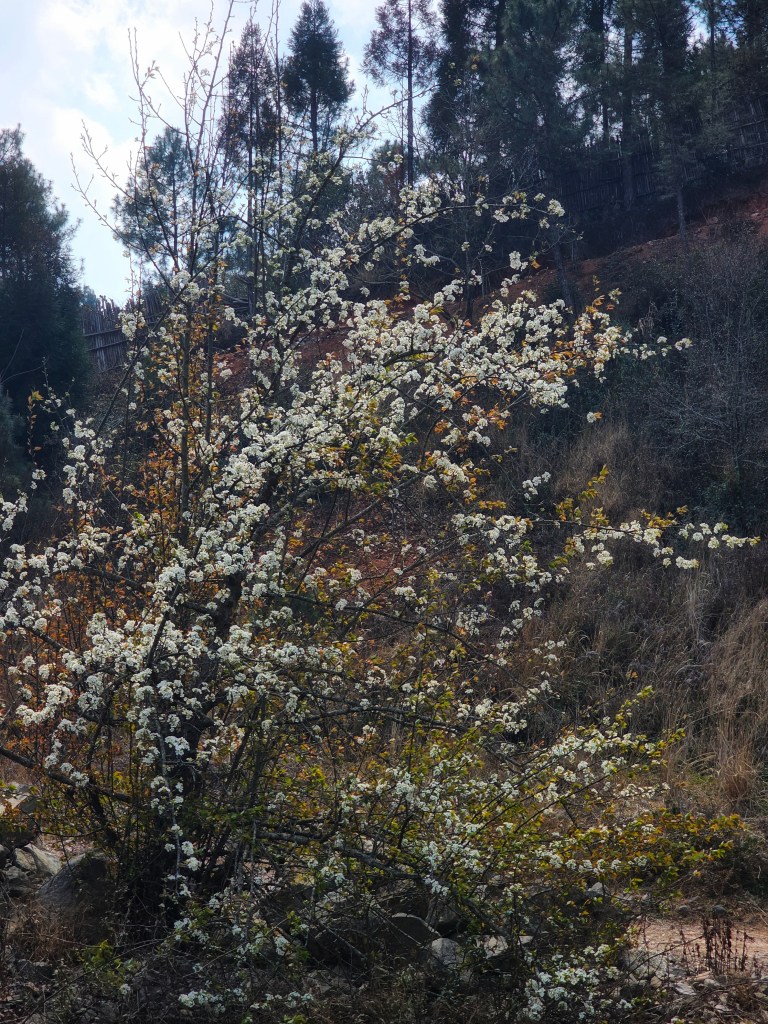
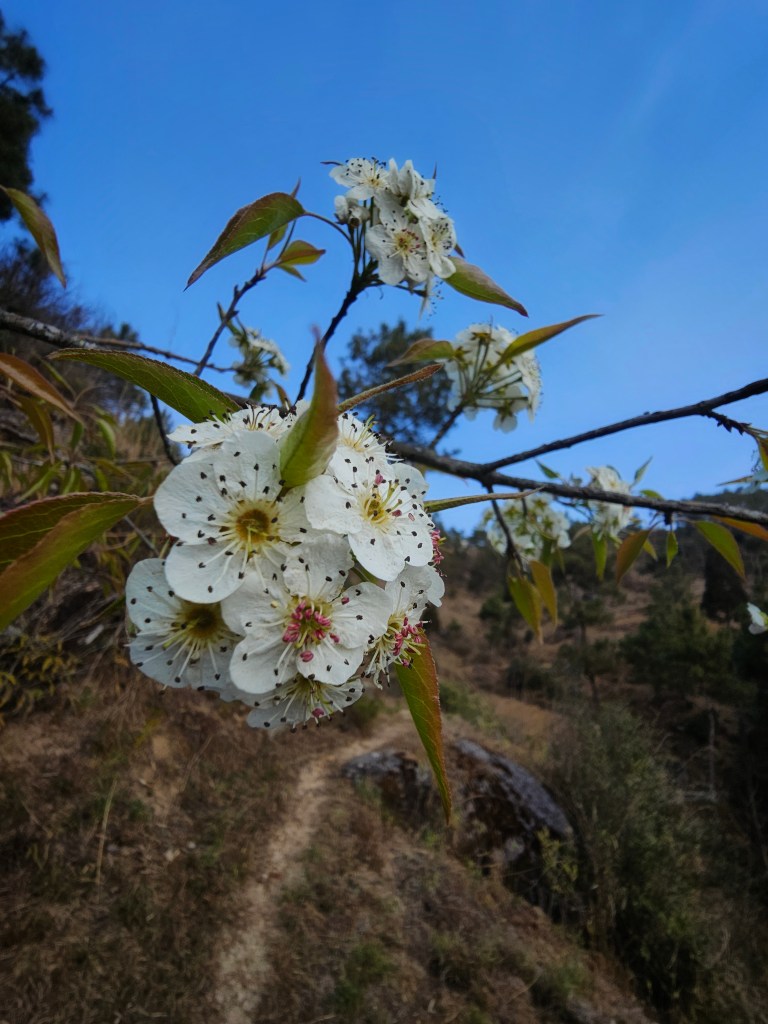
Finally, I stumbled upon the little gem of a village called Mawwan. Tucked away in the quiet folds of Meghalaya’s hills, Mawwan is a village where life still flows in rhythm with nature. The white wild Himalayan pear tree flowers which I had to admire from a distance during our drive, were now so close I could touch them! Here people draw water from cascading streams, grow their food on lovingly tended terrace farms, and gather firewood from the forest with a sense of respect rather than entitlement. In that quietude all I could hear was a soft hum of self-sufficiency passed down through generations.

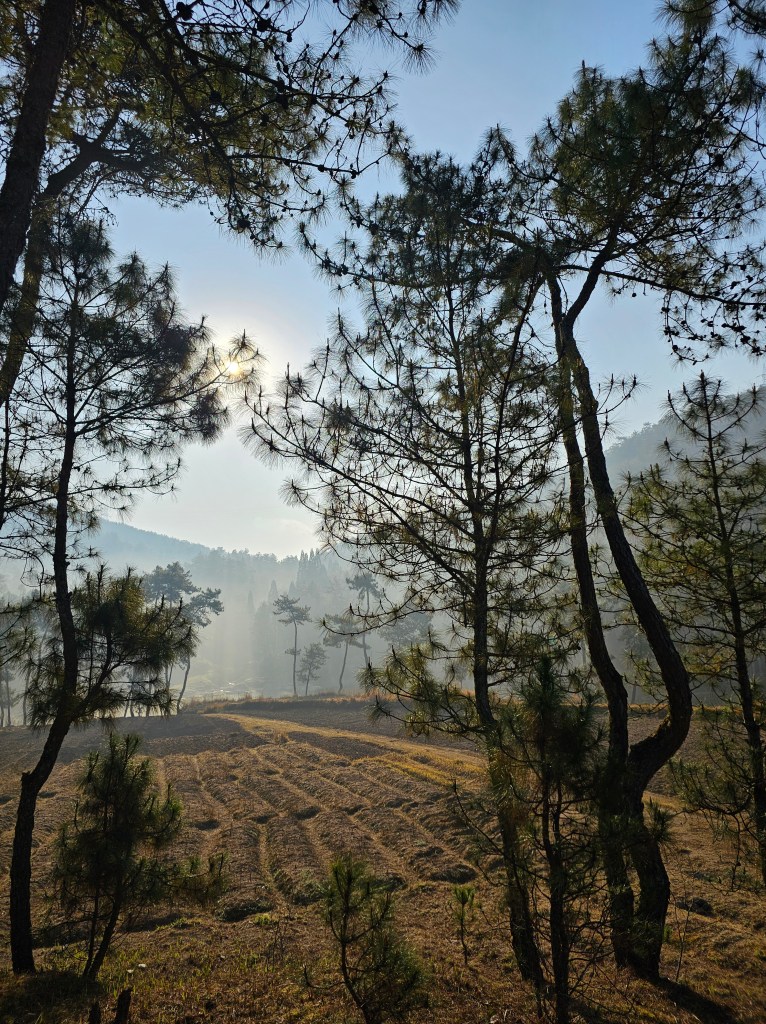
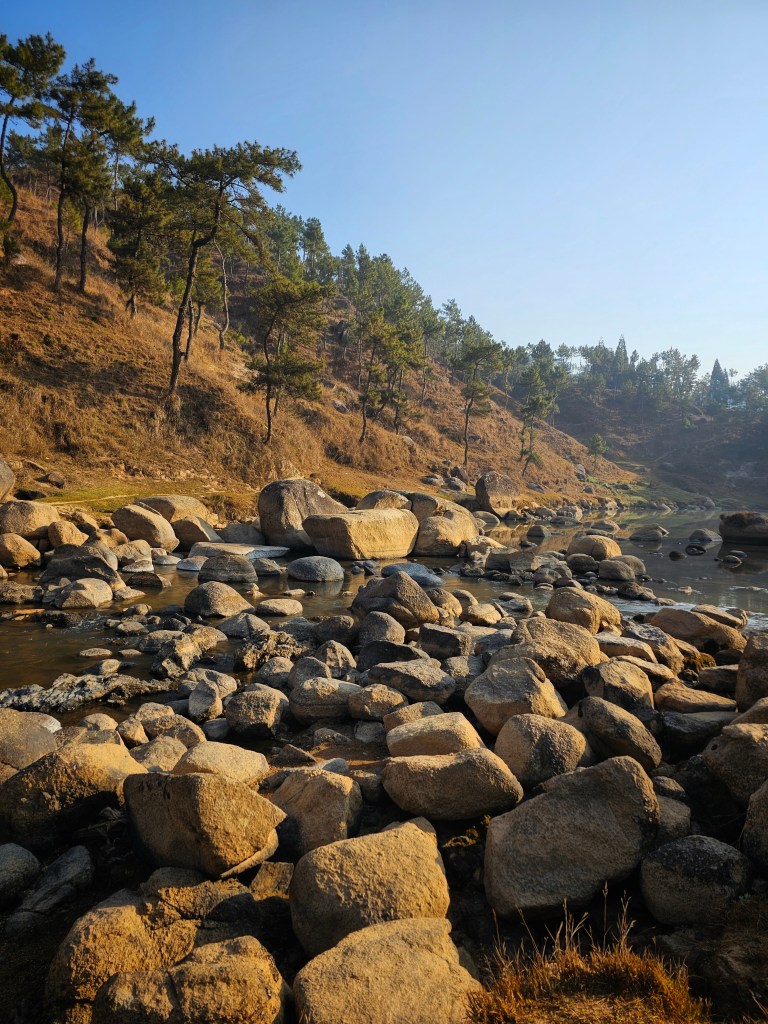
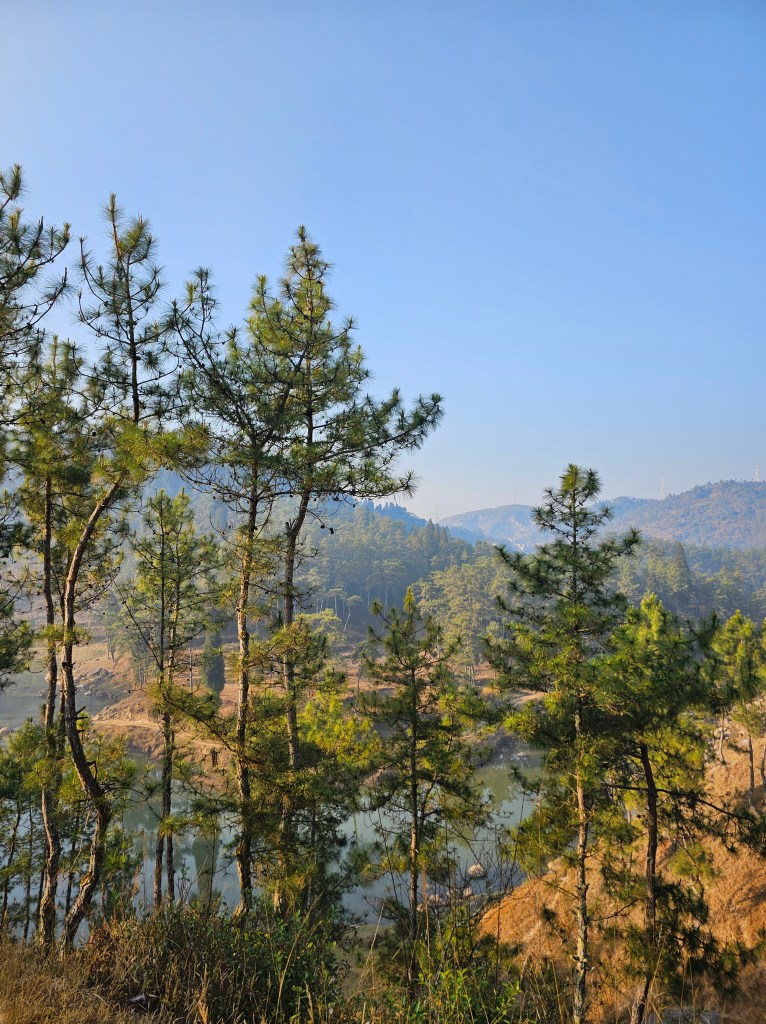

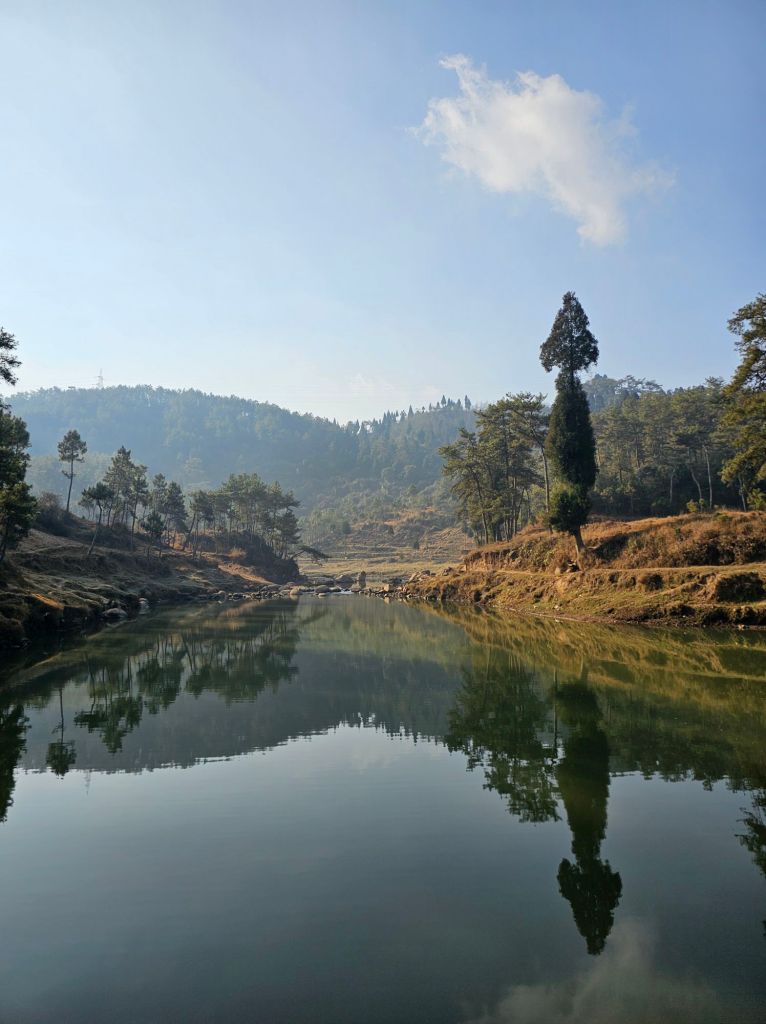
The cottage was located in a secluded spot inside the park, offering all the privacy one could ask for, with a few benches and chairs thoughtfully placed for sitting outdoors. The park had stairways leading downhill, inviting visitors to explore the valley below. But I spent most of my time wandering along the trails and treks carved out over time by the villagers – for foraging, farming, or making their way down to the cascades for fishing, bathing and washing. The rocky riverbed had naturally formed loungers – perfect for reclining or lying back. With the sun upon my face and the gurgling sound of cascading waters playing like music in my ears, I found all the relaxation I needed to feel rejuvenated and ready to return to my everyday life.
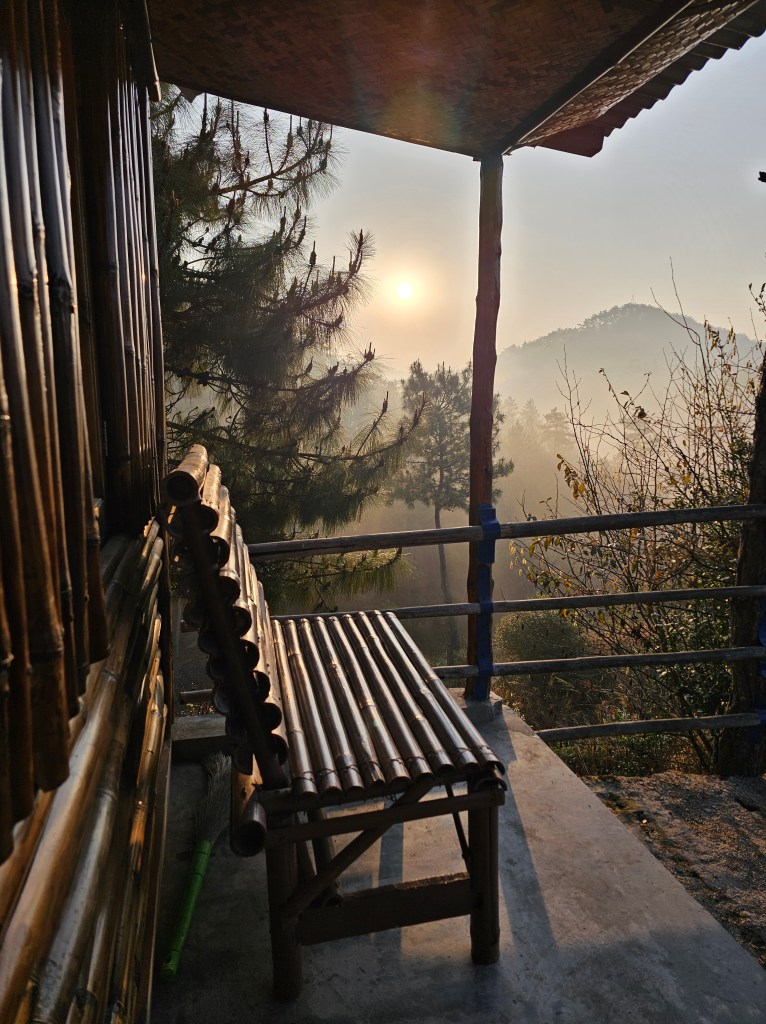
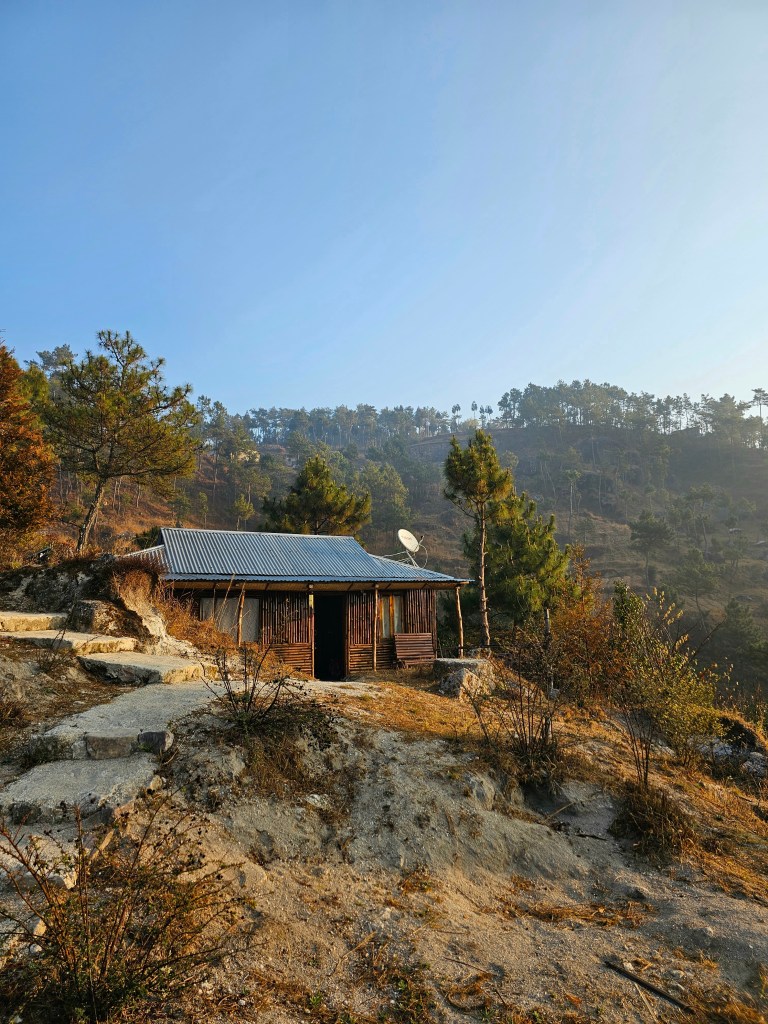
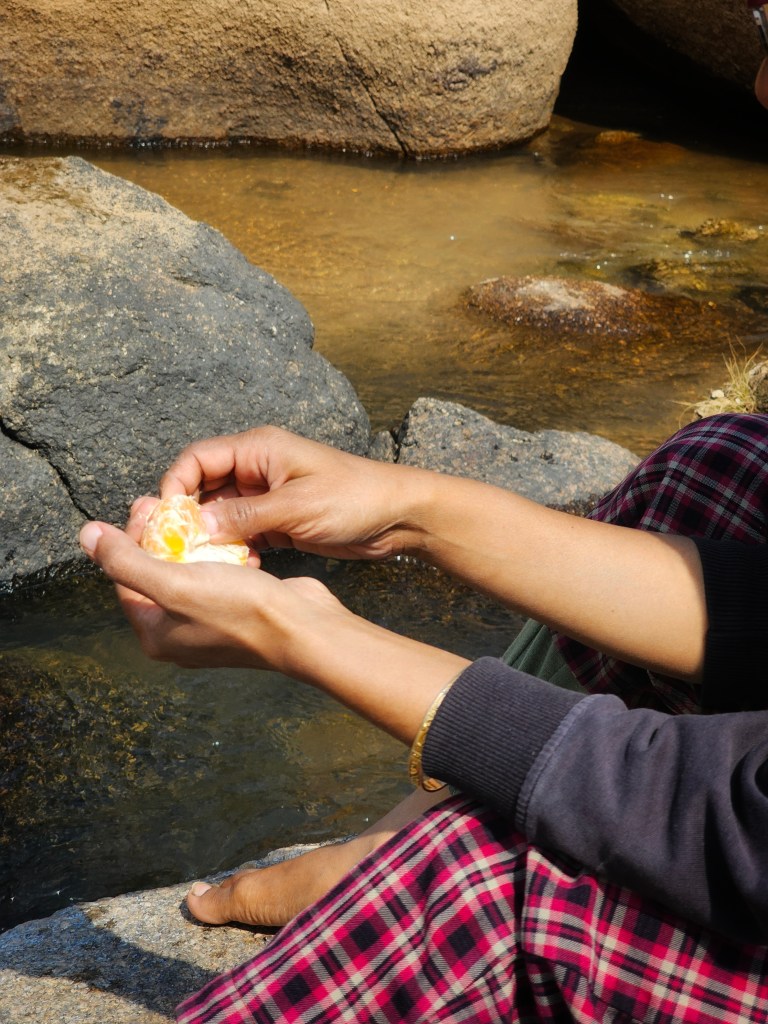
It’s not hard to recognize that in villages like Mawwan nature isn’t just a backdrop, but a provider, a guide and a way of life that continues to shape the village’s soul even as the outside world races ahead. Mawwan may one day follow in the footsteps of Laitkor and Laitlum, gradually stepping into the tourist spotlight. But until then, it will continue to offer soul-fulfilling experiences to slow-travellers like myself. In my own small way, I know I am contributing to the changes that Mawwan will inevitably face. Yet, with mindful, controlled tourism, that change can be gradual – and perhaps even sustainable. With the right effort and intention, places like Mawwan have the potential to grow into thoughtful, community-led ecotourism destinations.

 Casually Classical
Leave a comment