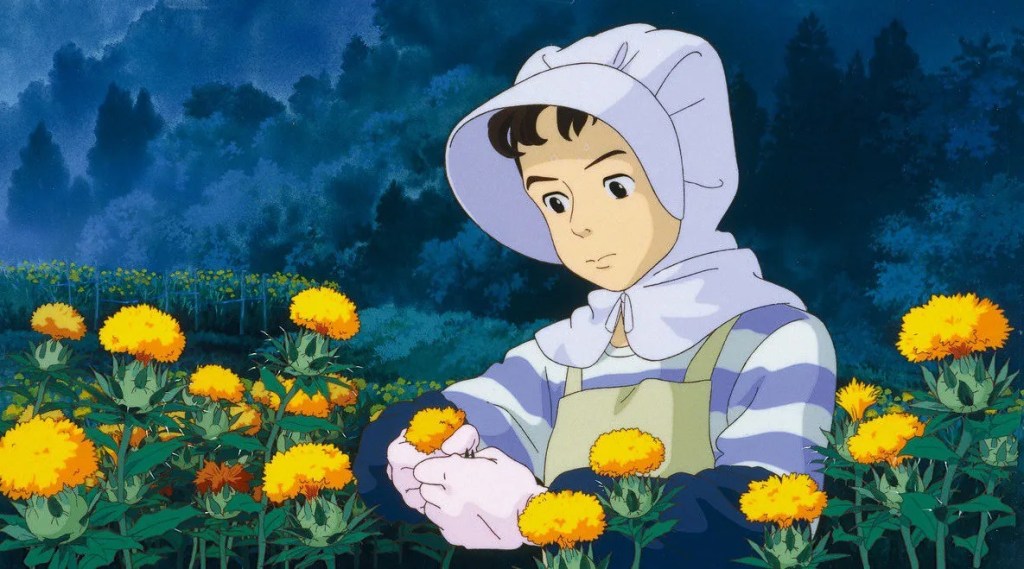
Last night a friend texted me a forwarded photo of him that looked like a shot from a Studio Ghibli movie. With Miyazaki’s thoughts on AI being shared in social media frequently, I should have guessed that something was off but then it is all about AI these days and I was not interested in digging into the news.
However, this picture shook me. Trust me, it’s not a hyperbole. I should have felt good seeing such a picture, instead it was a sadness that engulfed me. Is Artificial Intelligence now taking over Studio Ghibli’s work? Is it even possible? By night I saw two more status updates in WhatsApp with similar images. A dread had already started setting in my heart. By morning, it was no longer just sadness and dread; seeing there was a deluge of ‘Ghiblified’ images of people in their favourite moments in WhatsApp statuses and Instagram posts, I realized AI has just created its first paradigm shift in the span of a night.
It’s the end of an era. Isn’t it?
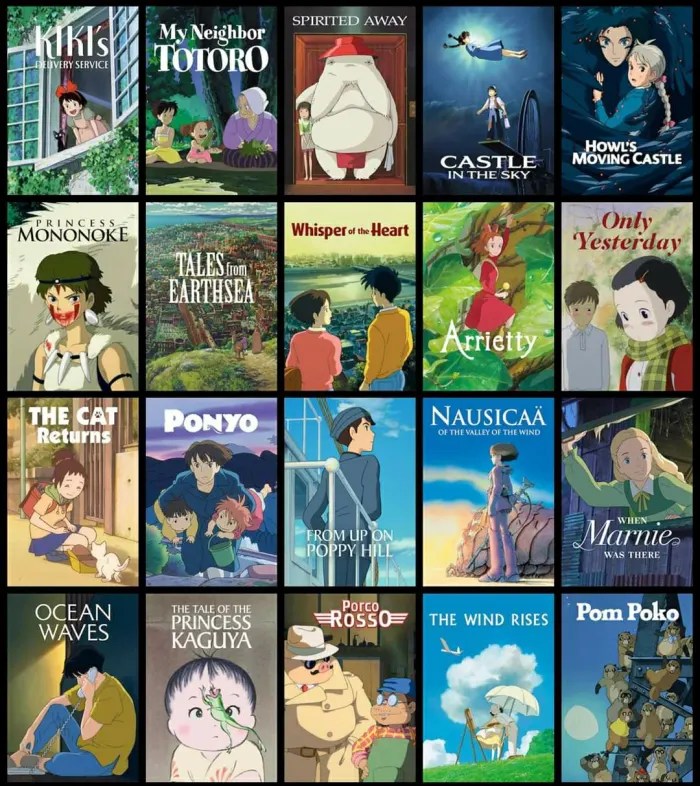
AI creating images is not new. ChatGPT and similar apps have already shown us the potential of an AI dominated world, how our current skills might become redundant soon and we will need to adapt and reskill ourselves. But ‘Ghiblify’ or ‘Ghiblification’ is the next level of Fordism! If Fordism was the harbinger of the technological era in the common man’s life, Ghiblifying is definitely the harbinger of the robotic era among the masses. Despite the flow from one technological change to another and the changing superstructure, we still had our emotional connections to art, culture and literature intact somehow. They were not threatened; we were not a witness of a paradigm shift.
Maybe our great grand-parents were, when the original paintings of da Vinci, Picasso, van Gogh, Kahlo were mass produced and became available in almost every household, their charm and aura lost among paintings which aren’t created with as much depth and devotion as they were. With their easy availability they must have crushed the hearts of those looking for depth in life through art, through a human touch to life.
But we – the millennials – hadn’t experienced revolutionary shifts of such scale. Until now.
Although I had come across Japanese anime much early in my life, my first true encounter with a Studio Ghibli movie happened with Grave of the Fireflies. A close friend, with whom I used to discuss movies a lot, had written a review on this one in his blog. The review intrigued me. I asked my roommate (from my post- graduation days) if she wanted to watch the movie with me. Knowing her deep appreciation of art, I knew no one could be a better companion to watch it with.
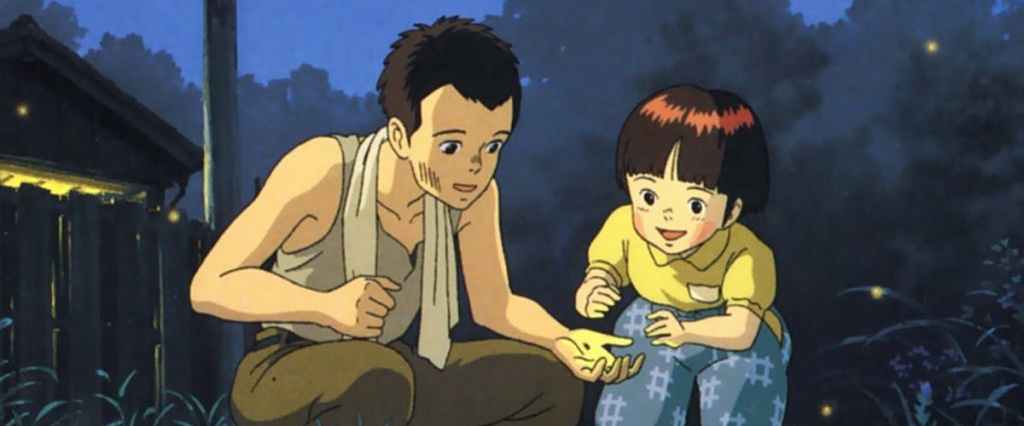
The memory is still so vivid. We had joined our beds to look like one double bed rather than two singles, so we reclined keeping the laptop on a bed table between us. Even as we relaxed our anticipation was tinged with skepticism because it is a war movie. However, the initial doubts were soon replaced by a deathly quiet, both of us engrossed in the movie, and by the end both of us had wept our pillows wet. For half an hour or so we couldn’t even look at each other and talk about how we felt. Perhaps very few movies have touched us so deeply in our lives. We remained heart-broken for about a week, recalling the story and scenes from the movie. That’s my first memory attached with Studio Ghibli.
Post that experience I started watching Ghibli movies one after the other. Each of them stirred new emotions; left me mesmerized. Whispers of the Heart, Kiki’s Delivery Service, Only Yesterday, The Wind Rises – I ended up watching these countless times. The blend of the simplicity of life they portrayed, the philosophy and depth of the storylines, and the hand-drawn animations was so unique, the style of Ghibli productions became a hallmark in the world of anime. In 2016 while I was freelancing as a world cinema critic I also contributed an essay on Isao Takahata’s direction in Cafe Dissensus. Over time I met people who loved Studio Ghibli movies for the very same reasons I did: their ability to transport us into a world which was so connected to nature and so spiritually fantastical that they acted as therapies in a world full of stress. Almost all of Studio Ghibli’s scenes are magically healing. They filled us with awe, in a world bereft of awe.
That awe is now gone. Overnight.
During my post-graduation days digital cameras were becoming popular but smartphones hadn’t made their way into each household. Only a few higher class people could afford them. So, when I was reading about Baudrillard’s ‘Simulacra and Simulation’ I kept imagining how hyperreal a world could get with image explosion. Then smartphones arrived. Photographs imploded our lives. Smarter phones arrived and photographs became more appealing than real time scenes. I thought to myself – ‘ah, so this is what Baudrillard was talking about.’ But still, creation was still in the hands of the humans, but what happens when masterpieces of art, of awe-inspiring storytelling, of excellence of human emotions and creativity, is taken over by technology in most trivial of ways that it starts mocking art and the artists?
Where should the artists find their soul then? Where do we go for the human touch to life? Or perhaps we shouldn’t long for the human touch any longer. We sit back and let AI wrench out our spirit, wring it, dry it and throw it to some mindless futuristic wolves?
Perhaps I am too much of an old soul. While people are amusing themselves by ‘Ghiblifying’ their images, I am just sad. I am witnessing something sinister. This is, perhaps, just the beginning of an era where humans will actually turn to robots and zombies, because we are not aware. We are so fascinated by what AI is doing, we have turned our backs to real emotions. Just like some futuristic movies like Matrix, Terminator, AI, I-Robot, Transcendence and others had forewarned us about. Pity, we didn’t take the warnings seriously; instead, we just entertained ourselves the same way we are entertaining ourselves now by ‘Ghiblifying’ our life.
Right now it is not even about if humans can be replaced by AI when it comes to creation. It is about society at large allowing it, isn’t it? That’s why perhaps it is a revolutionary shift, the end of an era? Our mindless consumption is at its heights. People following this trend of ‘Ghiblifying’ are not even aware what Studio Ghibli stands for or signifies.
A smart TV was an upgrade of a TV; a smartphone that of a cell phone. Everything has either been a new invention or improvisation. It was all about technology so far. The spirit of creation, the creative instincts and potential of a human being wasn’t being mocked yet. Technology and art were being simultaneously created by humans; one complementing the other in most instances. Even with mass production of paintings, the soul of the art, which rested in its strokes couldn’t be devalued, for it couldn’t be emulated. It was easy to find the pirated version.
For the first time in history, technology, through AI is attacking that very soul of art. It is replicating something, while adding its own touches, in a matter of seconds for which artists like Miyazaki had spent their lifetimes. Some of us are justifying such change by arguing that it saves time, it allows humans more leisure, it enhances scope for better production, a better quality of life. I wonder at what cost. At the cost of extracting all awe and beauty from the sources of life and thieving all food for the soul?
I am sad and I know I am not the only one who is sad.
 Casually Classical
Leave a comment