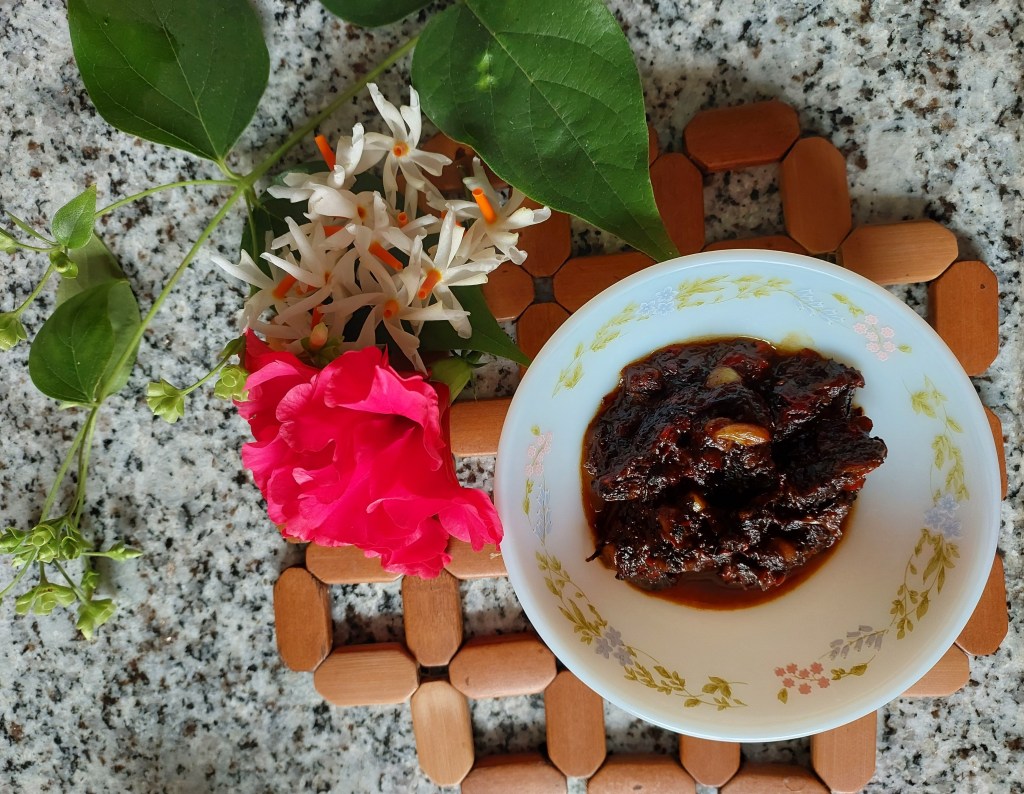
Nature is strange; humans stranger
The sweetness of the Sewali slips into a savage flavour
on flames, yet humans have found a way
to pacify it, add some pungency to the bitter
and make it bittersweet.
A south Indian family, I had a chance to know and have dinner with in their ancestral home, were surprised knowing we eat night jasmine. As an animated discussion made headway post dinner, my friend suddenly noticed the night jasmine tree and asked: “do you eat the flowers and leaves with rice?” They were bewildered. They said they never had. I added: “We do. It goes well with fish intestines.” My nonchalant attitude was followed by an uncomfortable silence.
You see, I have always been shifting between vegetarianism and non-vegetarianism in my life. Now and then I shock vegetarian people reminiscing about my non-vegetarian days, because they take it for granted that I have always been a vegetarian. Realizing that’s what happened, I laughed and confessed: “Oh no, I was not always a vegetarian.”
Thankfully the merriment resurfaced. However, I made a mental note that someday I will post a video on how we eat night jasmine, and if possible the vegetarian dish. So, here it is.
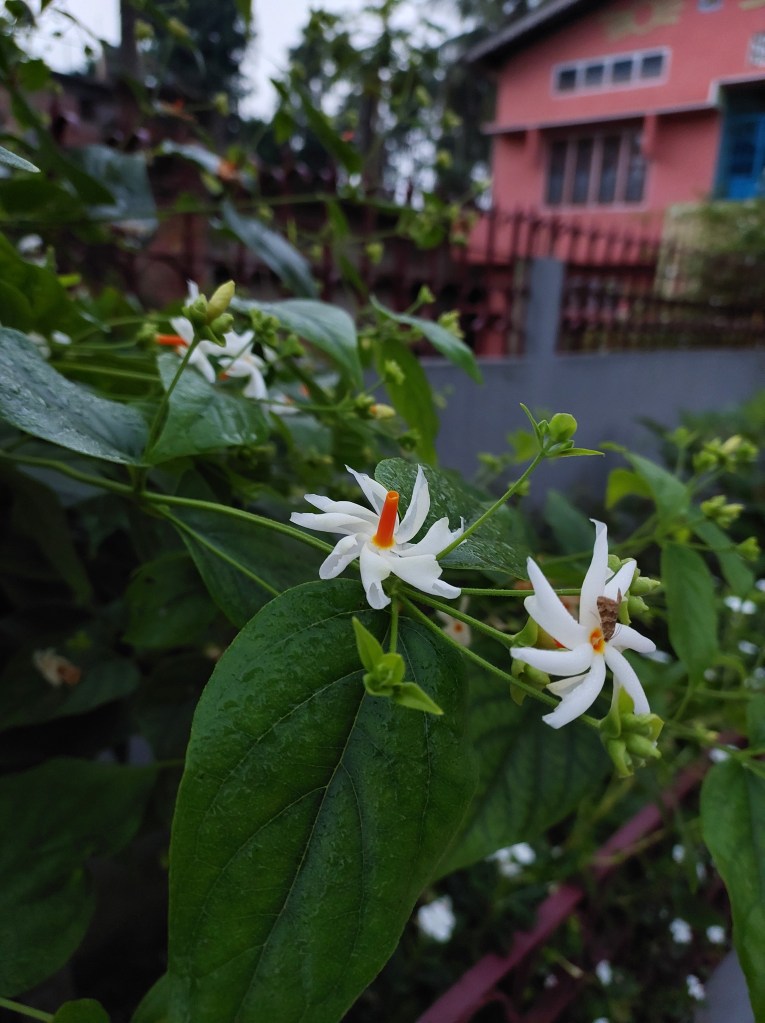
There are many varieties of night-blooming jasmines across south Asia. In India, the Parijat (in southern region) and Shiuli or Sewali (in eastern region) are the two most common variety known for their brevity. They bloom within the night, fall by morning and wither during the day.
Sewali in the Sharad Hritu (the autumn season) has remained an undying motif in Assamese poems and lyrics; in other cultures too. The same is also believed to be consumed during its flowering season, that is between September and November, for health benefits.
In Assam we typically cook the flowers with an alkali (Khaar) we prepare from banana peels or trunk. Not just any banana, it has to be of the ‘musa balbisiana colla’ (called Bhim Kol in Assamese).
If you are an Assamese, you probably already know how to make Khaar, or else you can check out the numerous videos available in YouTube. However, Khaar is also available these days in the market to buy readymade.
Here’s a small video to guide you how to prepare a dish out of Sewali…
Health benefits:
It’s anti-inflammatory properties treat respiratory ailments, cold and fevers, arthritis, sciatica, and ease menstrual cramps.
Autumn is a time of transition and as such, immunity is compromised. Hence, this flower adds the necessary precaution needed to the diet.
The leaves of the tree are also bitter, but when taken as fritters, they too turn bittersweet.
 Casually Classical
Leave a comment