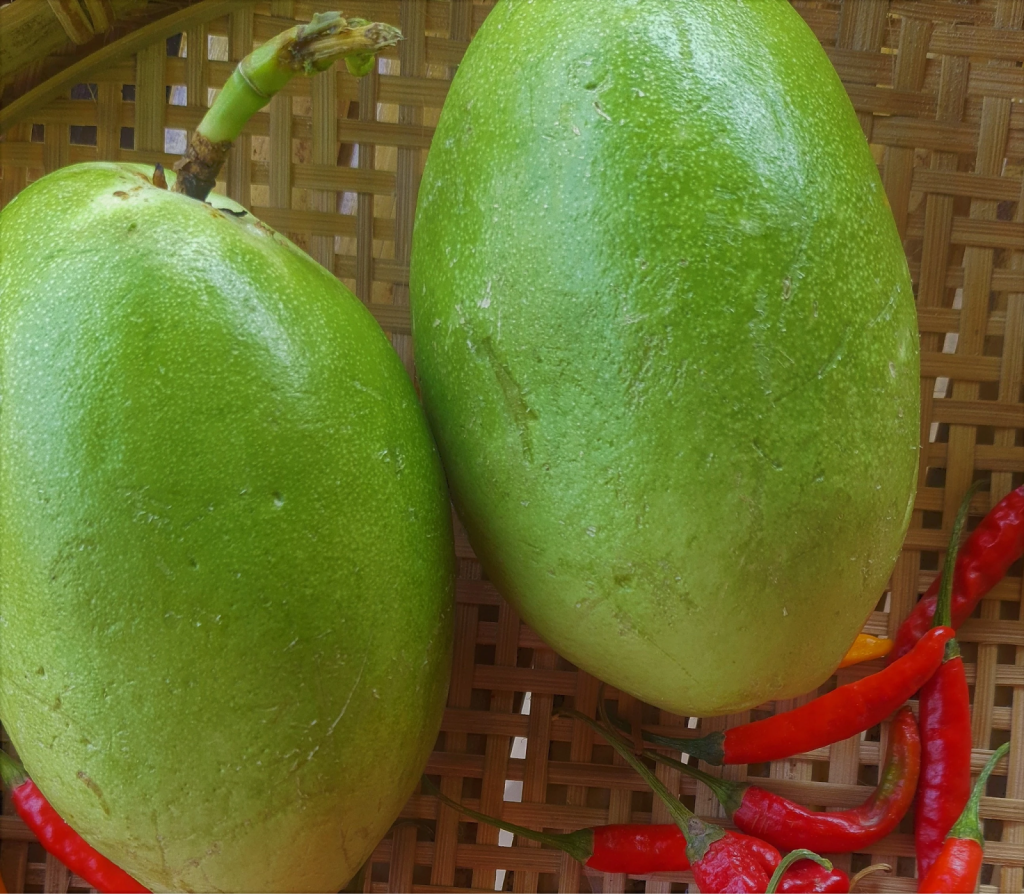
I peeped in idly into the shopping bag. Couple of seconds later my hands automatically reached out to grab a squash (papaya?) like vegetable; my brows narrowed into a frown. I put them on the saloni besides the dried chilies.
“What’s this? It looks like squash but it isn’t, right?”
Prabhakar was doing the dishes. He had that mischievous smile lingering on his lips which he shows when he is either up to some mischief or when he discovers something unusual.
“It is called Mewa (he was referring to the Assamese name). It is eaten like a vegetable, prepared as a sabji or curry.”
“Oh.” My expression hung somewhere between delight and inquisitiveness. I kept looking at the supposedly exotic vegetable which I was sure I had never had before. Exhausted after the day’s work, I kept my inquisitiveness at bay and tried to sleep contently with the knowledge that it is called Mewa.
In the morning the first thing that occurred to my mind was: is it really Mewa? The exhaustion and contentment of the previous night gone, I was back into my research mode. A Facebook post from 2012 enlightened me to some extent. There was great confusion in the comments trying to recognize the vegetable. Most confused it with Kunduli (Tinda/Ivy Gourd), Nemu (Assamese lemons), Lau (Bottle Gourd), Squash (Chow Chow), etc. I knew all of those and I was pretty sure they couldn’t be what Prabhakar claimed as Mewa, but some of the comments mentioned Bilonbi Tenga and Mirika Tenga and for the life of me I didn’t know what those were! The vegetable (or maybe fruit…by now I was not very sure it is a vegetable) looked similar to this Bilonbi Tenga (Avorrhea bilimbi).
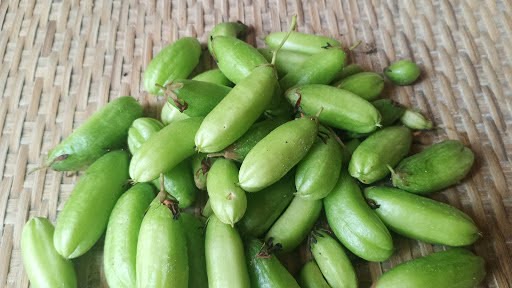
“Look…it looks like Bilonbi Tenga. No?” (I had to google search for what Bilombi Tenga looked like of course)
Prabhakar looked closely at the photo, and jumped with excitement:
“This is the tree I saw the other day, isn’t it? The one of which I took a picture and showed you, remember?”
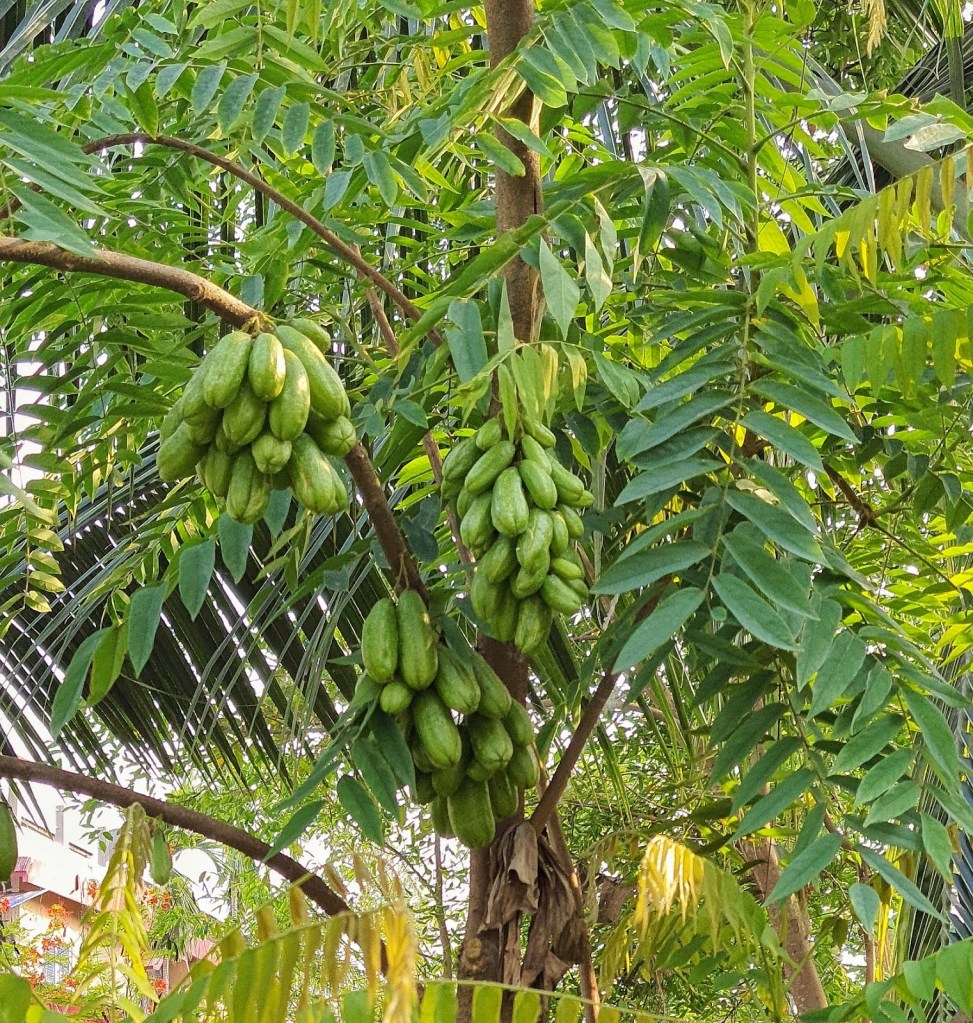

“Yes! I do.” I shared his excitement because I figured that a few days ago we actually came across a Bilombi Tenga tree.
But…
“It can’t be this fruit. Mewa is a vine fruit.” Prabhakar shook his head and negated.
“Well, the fruits look so similar! I am sure you are mistaken.” I wasn’t convinced.
Prabhakar decided to consult our mothers. My mother was obviously confused but his mother was confident that it is Mewa, and his mother’s confidence knocked down mine. I again got down delving deeper into the research. Chayan preferred to remain neutral and left it to us to come to some conclusion. He would be happy with any, as long as its healthy and edible.
“Cut the fruit. Cut it. Let me see what’s inside. Let me taste first.” I insisted.
So, Prabhakar cut it into halves.
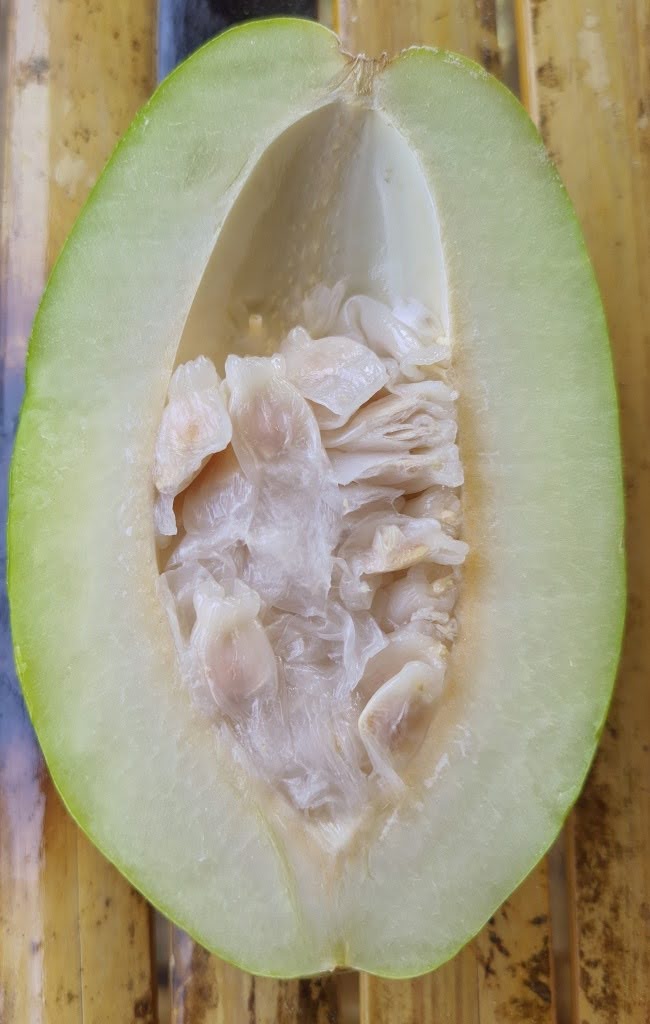
“Look! I told you this is Mewa. It has small seeds with pulp.” He squeaked in a triumphant tone.
I came back to my desk with the frown on. No. It can’t be Mewa. It looks nothing like the Mewa. After about ten minutes of more research:
“Do you think it is Bor Thekera?” I yelled for all to hear and reply, but a rebuke came from Prabhakar.
“Are you nuts? How can this be Bor Thekera (Garcinia Pedunculata)?”
“Well, because it looks similar!” In my head, though, the confusion still yelled louder. I remembered Bor Thekera has large seeds.
The doubts began because the fruit although had traits of the Mewa (Passiflora Foetida), it was larger and more oblong in shape and it didn’t resemble any of the local fruits. Could it be some larger version of the passion fruit? The fact that it is a fruit with passion fruit like seeds and pulp and that it grows on a climber all pointed out that the fruit must have some connection to the passion fruit family. It turned out my hunch was correct.
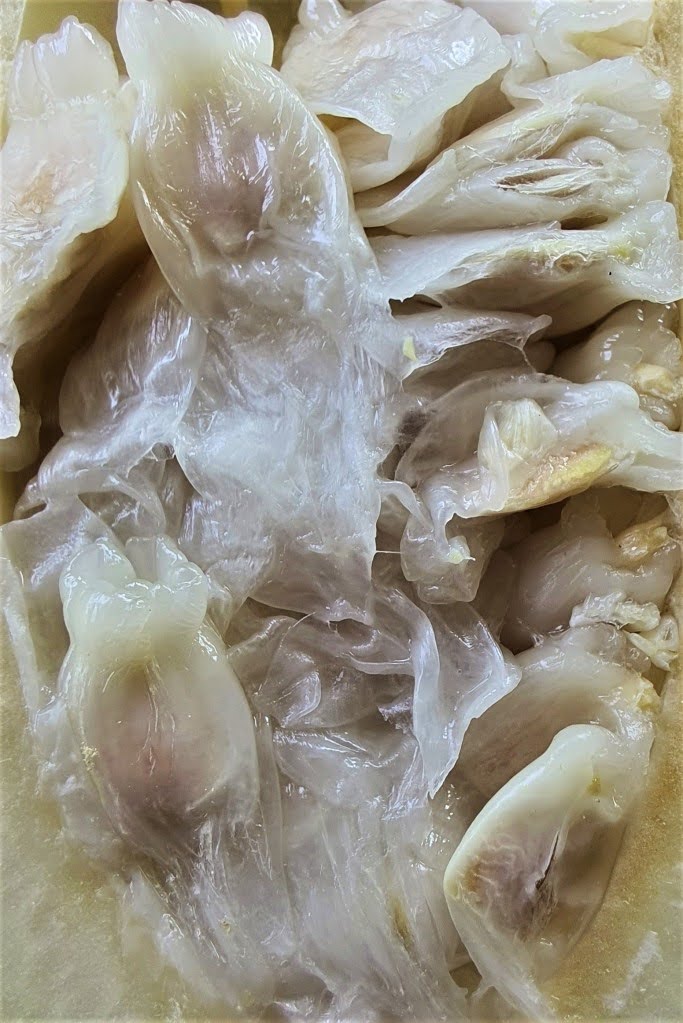
Finally, after much brainstorming and research, I figured out that it is the Giant Granadilla (Passiflora Quadrangularis). In absence of any local names, since its resemblance is closer to the Passiflora Foetida, it is called Mewa (Mewa Bel) or Koth Bel or Lota Bel in Assamese. However, this bigger one is not a native variety but must have been traded at some point of time and naturalized in Assam.
Passiflora Quadrangularis is a perennial evergreen climber native to Central and South America. The fruit has a mildly tangy taste, no strong scent, contains numerous seeds and an edible pulp like the passion fruit. In Assam the fruit is relatively smaller than the ones in America, but a large one is almost the size of a papaya! The seeds and pulp are eaten or extracted into juice for the tangy taste; however, the flesh has such a gentle sourness that it is usually prepared into a curry and eaten as a vegetable with rice.
Granadilla is found to have a fair amount of phosphorous and some calcium. It is rich in antioxidants.
We prepared a fish curry with the granadilla that night. The flesh is cut into cube like pieces and fried in the same oil where the fish pieces were fried. After adding some salt and turmeric powder, a little bit of water is poured and the curry is left to boil. At the end the fried pieces of fish are added to the curry and it is left to boil for some more time.
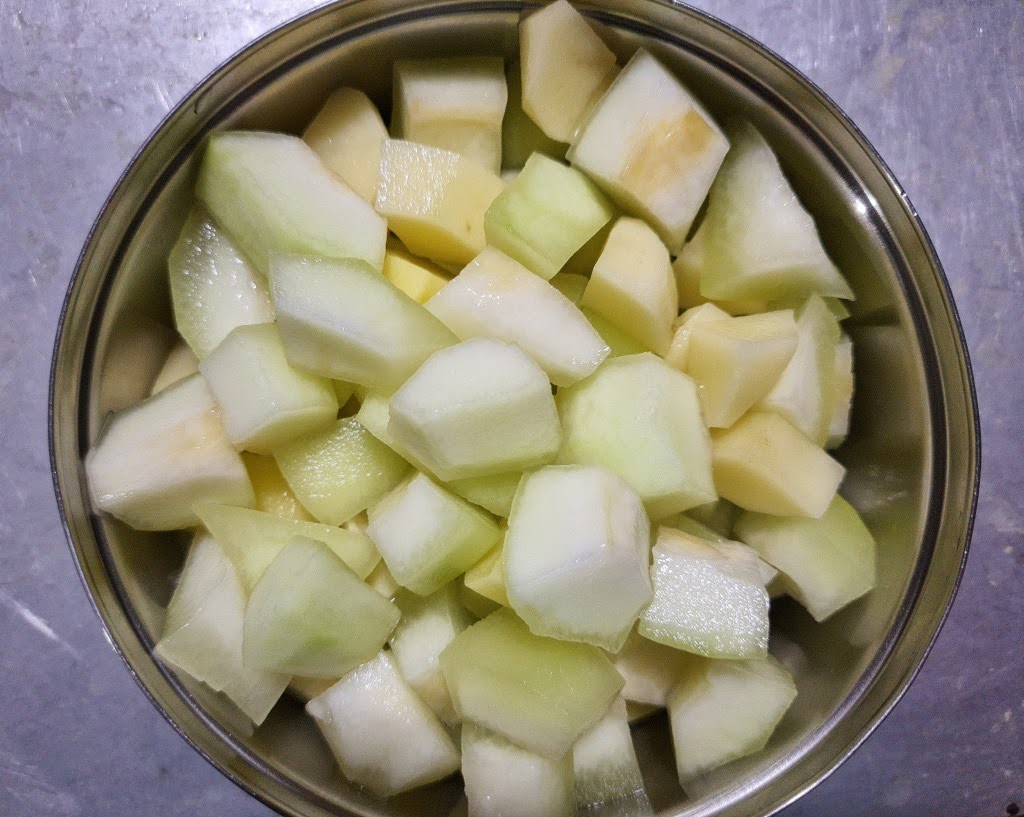
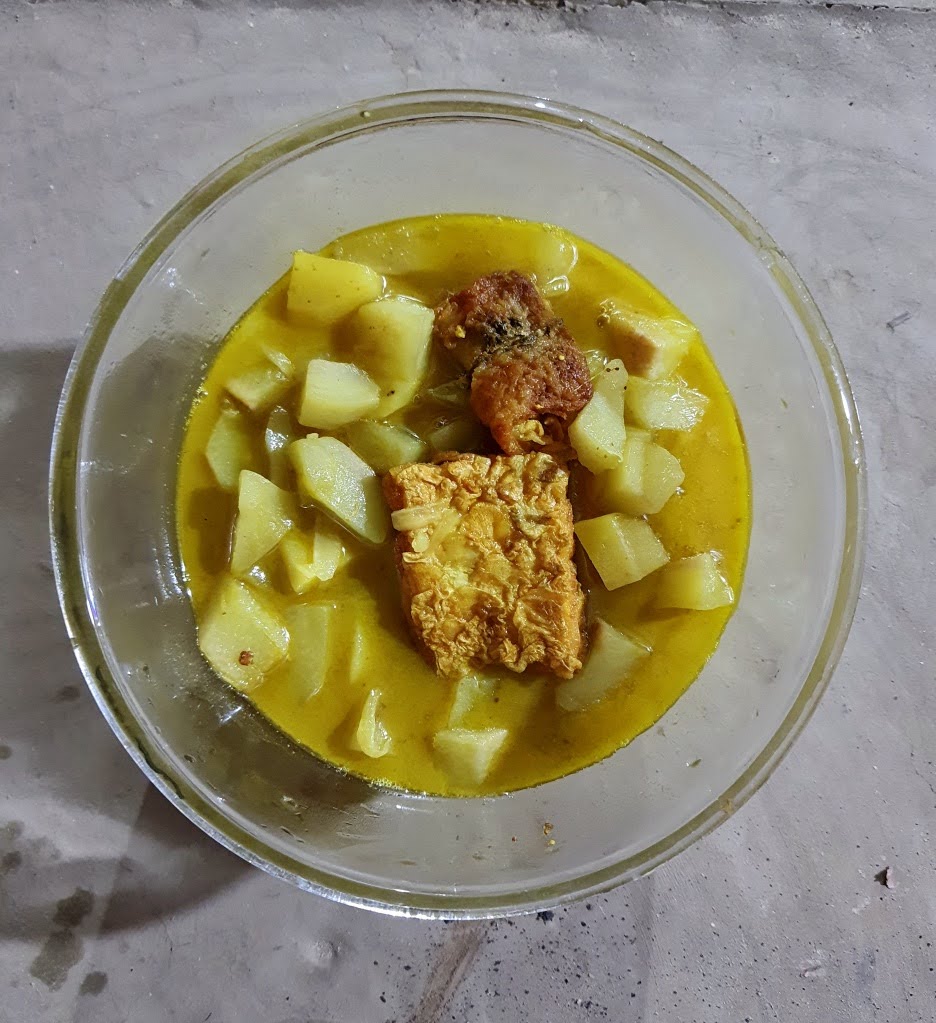
We took it along with rice and fish eggs fry, and once again relished the fact that when we live midst nature in a tropical country, the taste buds are endlessly satiated!
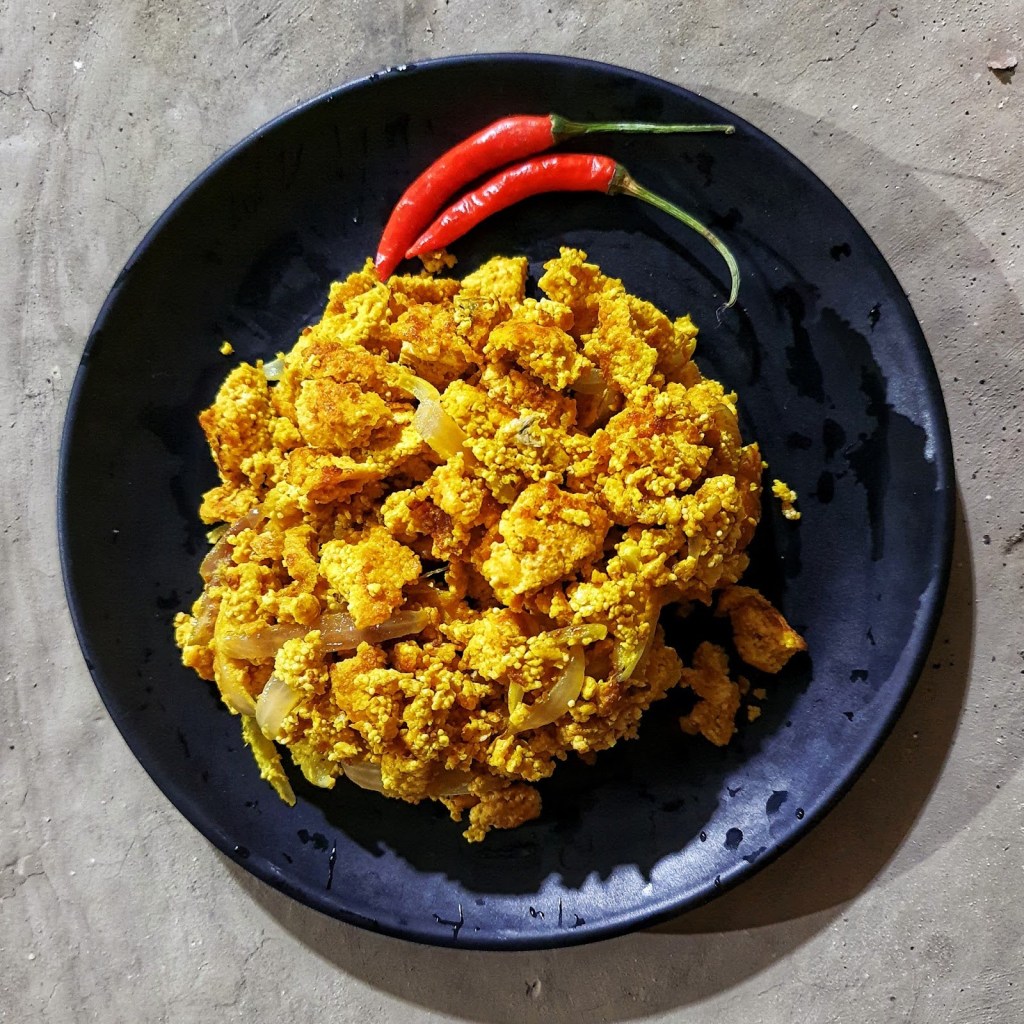
Photo Courtesy: Prabhakar
Saloni: a relatively flat and large bamboo sieve used for straining water and drying food stuff

 Casually Classical
Leave a comment