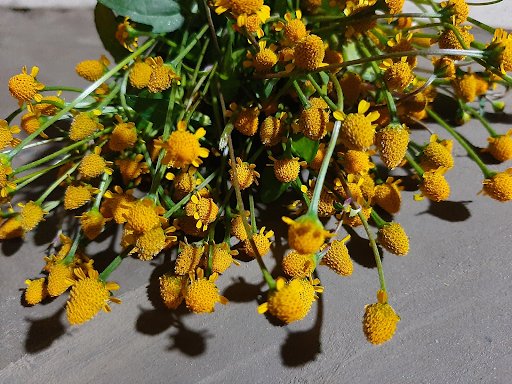
It was an usual day at farm, until I saw Uday uprooting the weeds with tiny yellow flower heads that we often trample under feet unconsciously while walking. No, wait! Is it not a weed as I have always believed?
“What are you up to, Uday?”
“Need them for preparing chicken.”
“Really?”
“Yes, we usually boil fish, chicken and pork with this herb.” [By ‘we’ he meant the Mishing community]
“Okayyy…” I took my time digesting the information…
“What do you call it?”
“Marchag.”
…and the moment I was free from work, unable to hold back my curiosity anymore, I started rummaging through various plant information sites in google. Later in the evening, while I was still researching, Uday shared with us some chicken curry. For the first time in life I realized something else on this earth could taste a little like black pepper, but not exactly like it: it was more of a spicy warmth initially that transforms into a stronger hot and prickling sensation on the taste buds.
Turns out the weed is known as Marsh Para Cress in English (scientific name: Acmella Uliginosa) and it has medicinal qualities. I am not surprised my toothache – which is a consistent nuisance during extremely cold days – gradually reduced and disappeared.
Marsh Para Cress has always been used in Ayurvedic treatments. Although the whole plant is consumed as food, its leaves and flower heads have antifungal, antibacterial, anthelminthic, antimalarial, analgesic and febrifuge qualities. It cures toothache, earache, headache, flu, cough, sore throat, rabies disease, tuberculosis, infant fever and is given to lactating mothers for increasing milk flow. Its laxative and diuretic qualities also help treating digestive and urinary disorders. Young roots are also used for preparing decoctions for dysentery and diarrhea.
It is a flowering herb in the sunflower family (genus – Acmella; family – Compositae), that has its origins in South America (countries like Bolivia, Brazil, Venezuela etc.) but has also been naturalized over time in tropical Asia, Africa and Pacific Islands. A wild plant, unless cultivated, it has erect stems, height varying between 20-100 cm and spreads easily.
Ever since that day I stopped trampling upon them, and let them grow. Occasionally now we use the herb in various dishes, especially in chicken curries.

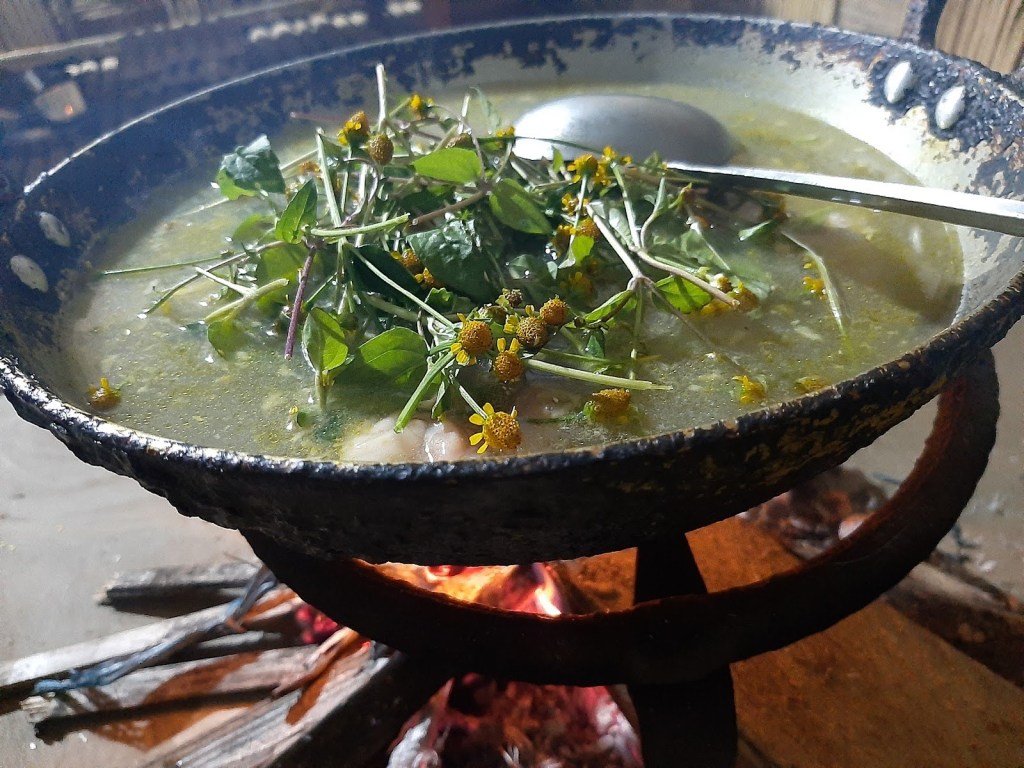
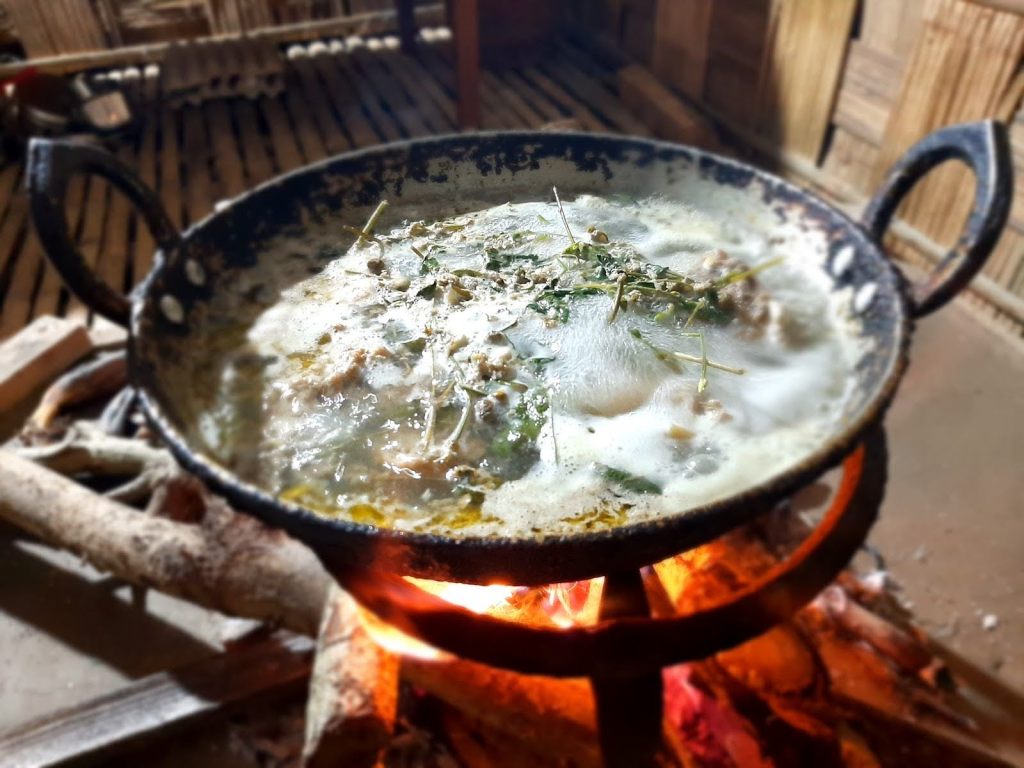
Such shifts to traditional diets, is not just a way back to healthy living, but for some reason is rather fulfilling for the soul.
 Casually Classical
Leave a comment