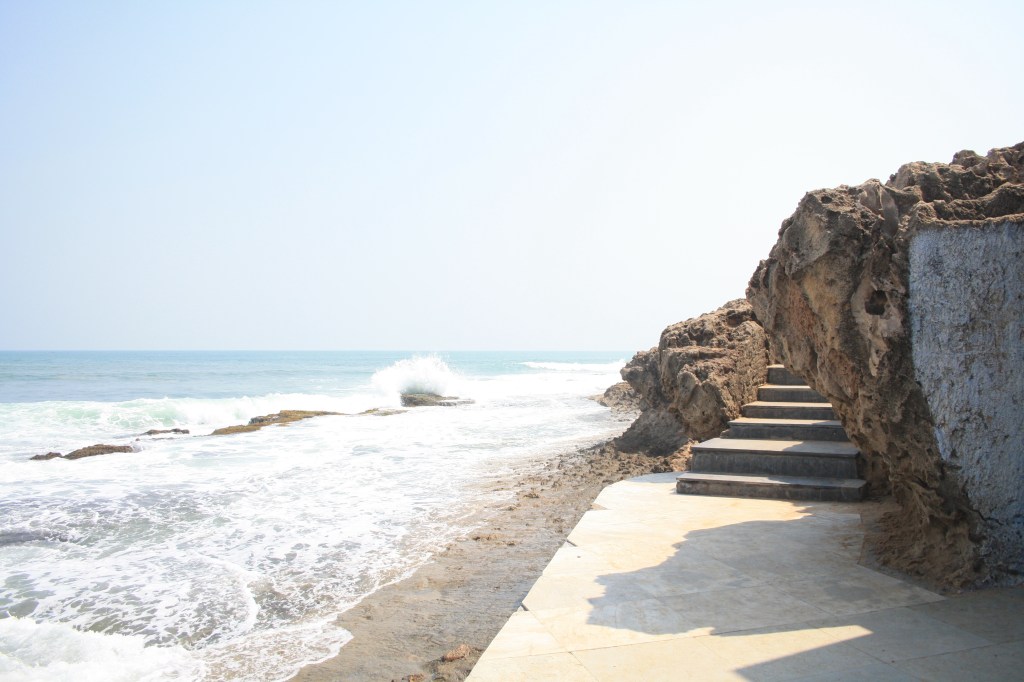
I made my very first trip to South India during the summer of 2015 and it began with Tamil Nadu, on the off chance that on this land of Gods I might find the strength to deal with my life, which was edging on the brink of a sea change. I had planned to make my way to Kanyakumari, pausing at several places along the Coromandel Coast. But the journey ended, unexpectedly, in Manapad. Why so is the subject of this story.
Until then, Tamil Nadu had given me everything I had hoped for: the blazing sun, tall and resilient coconut trees, sheep grazing lazily on rust-red soil, slumbering villages, and elderly men – well into their seventies – zipping down highways in short white dhotis and sunglasses, confidently astride their bikes. The air carried a sacred blend of scents: thatched coconut-leaf roofs, the sea-worn skin of fishermen, incense wafting from roadside shrines, and the ever-present vibrance of colorful temples. It was a landscape alive, breathing, vivid.
But as I neared Manapad, the scenery began to shift. The coast transformed: from tidal flats to rugged cliffs, and something in the air changed too. A difference, sharp and unmistakable, lingered in the wind, unlike anything I had encountered along the way.
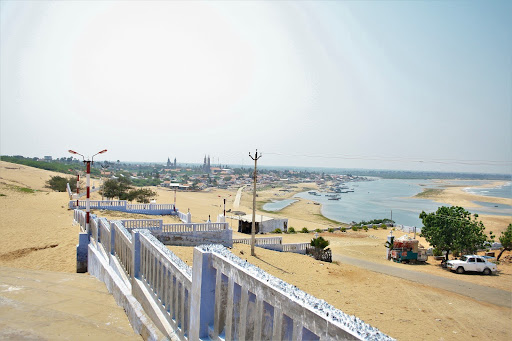
From a distance, I caught sight of a church perched high above the landscape, its silhouette gradually swelling with each passing mile – until, at last, a solitary, colossal white structure stood before me, solemn and imposing.
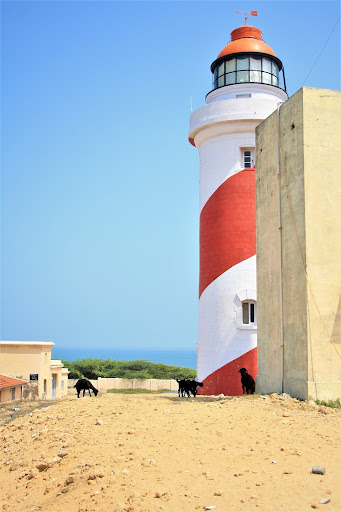
Behind the church stood a lighthouse, painted in bold red and white stripes, sharing the same aloof, watchful stance.
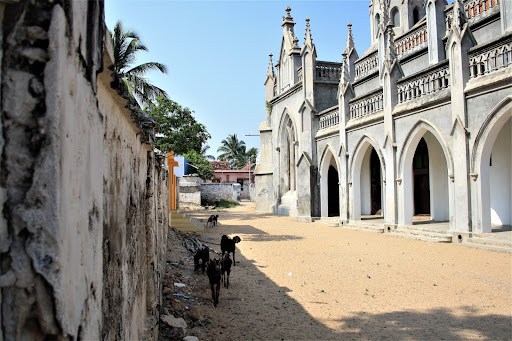
On our way, we passed two more majestic churches, silent roads, and old yet spacious houses, each surrounded by generous stretches of open land.
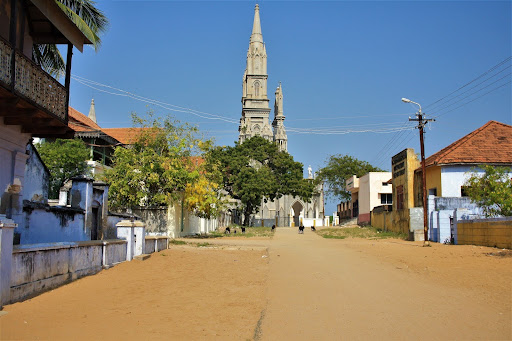
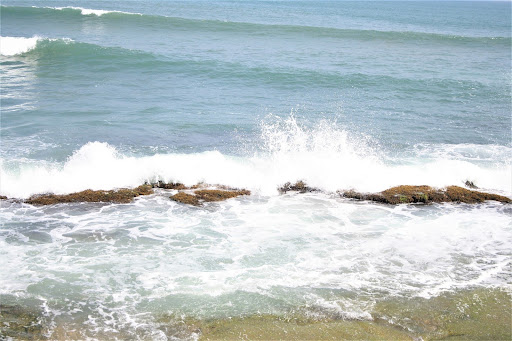
The place had the aura of a small European coastal village, yet there was a forlornness about it: a quiet desolation. The ocean roared, fierce and deafening, as waves crashed against the lonely shore, amplifying the sense of abandonment that hung in the air.
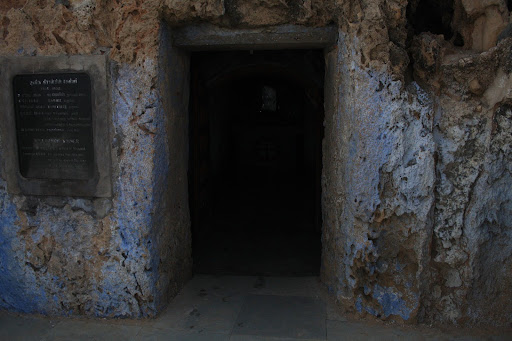
Turning the corner around the elevated Holy Cross Church, I stumbled upon a quiet alcove—carefully kept, as though its occupant had only just stepped away.
These churches, I later learned, were built during the 1500s, when Manapad was under Portuguese rule. The Holy Cross Church is said to house a relic of profound significance: a fragment of the True Cross from Jerusalem. A miraculous story surrounds its arrival on these shores. It was here, in this very alcove overlooking the sea, that St. Francis Xavier made his home for more than two years after arriving in India on his missionary journey in 1542.
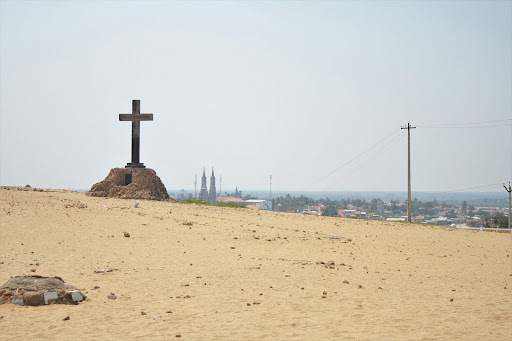
I wondered – if the heart-wrenching call of the ocean in the middle of the day felt so unsettling to me in the twenty-first century, how must he have endured the sorrow of those long, solitary nights?
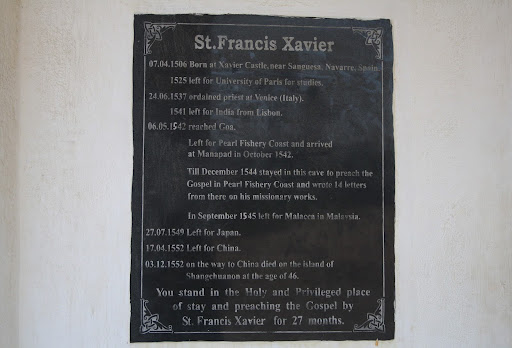
A goat herder I met shared stories from St. Xavier’s time – tales of miraculous healings and the missionary’s deep care for the local people. “We hear St. Francis did so much for us back then,” he said, “but even with all the modern tools at our disposal, the people of Manapad still face immense loss every time a tsunami strikes. And it takes years to rebuild – some never recover.”
Even if he hadn’t spoken of it, the sight of the local hospital – its yellow paint peeling and goats grazing on the wild grass inside its grounds – spoke volumes. In the face of such neglect, my own struggles suddenly felt insignificant.

Beneath the spirit of every ardent traveler lies a hungry soul, always hoping to find a morsel of nourishment -something, somewhere, that might feed it. Sometimes, it finds only a crumb. And sometimes, it is met with an entire loaf. In those rare moments, the soul, overwhelmed, simply refuses to move.
If the rest of Tamil Nadu had offered me crumbs, Manapad placed a whole loaf before me. The haunting stillness of the afternoon lingered, even as children played merrily on the school porch. The quiet rhythm of parish life, the fleeting face of a toddler on the street, and not far off, the relentless call of the waves -something very poignant touched my soul.
I often wonder: do the chimes of the church clock rise above all other sounds – not just to mark the passing hour, but to speak of something greater, something beyond time?
Courtesy: To my friend Ankur who suggested I go to Manapad and to our many conversations over correspondence. This piece is just an extension of my thoughts that I had conveyed to him, after my very first trip to South India.
 Casually Classical
Leave a comment